In most Indian homes, leftover rice from dinner becomes breakfast. Fried rice, curd rice, or just reheated with dal. Totally normal. But there's a catch most people don't know about.
The Bacillus cereus problem
Cooked rice can grow a bacteria called Bacillus cereus. This bacteria is present in uncooked rice as spores. Cooking doesn't kill the spores. When cooked rice sits at room temperature, the spores germinate and produce toxins. These toxins cause vomiting and diarrhea within 1-5 hours of eating.
This isn't rare or theoretical. Rice-related food poisoning is one of the most common types in the world.
The danger zone
Room temperature rice for more than 1-2 hours is the problem. In Indian summers (30-40°C), bacteria multiply rapidly. Rice left in the cooker overnight? That's 8+ hours in the danger zone.
The cooler the rice gets slowly at room temperature, the more time bacteria have to grow. That's why "it was covered" doesn't help — the temperature is what matters, not the lid.
How to store leftover rice safely
- Refrigerate within 1 hour of cooking. Don't wait for it to cool to room temperature. Spread it in a shallow container to cool faster, then fridge it.
- Use within 24 hours. Refrigerated rice is safe for about a day. After that, the risk goes up even in the fridge.
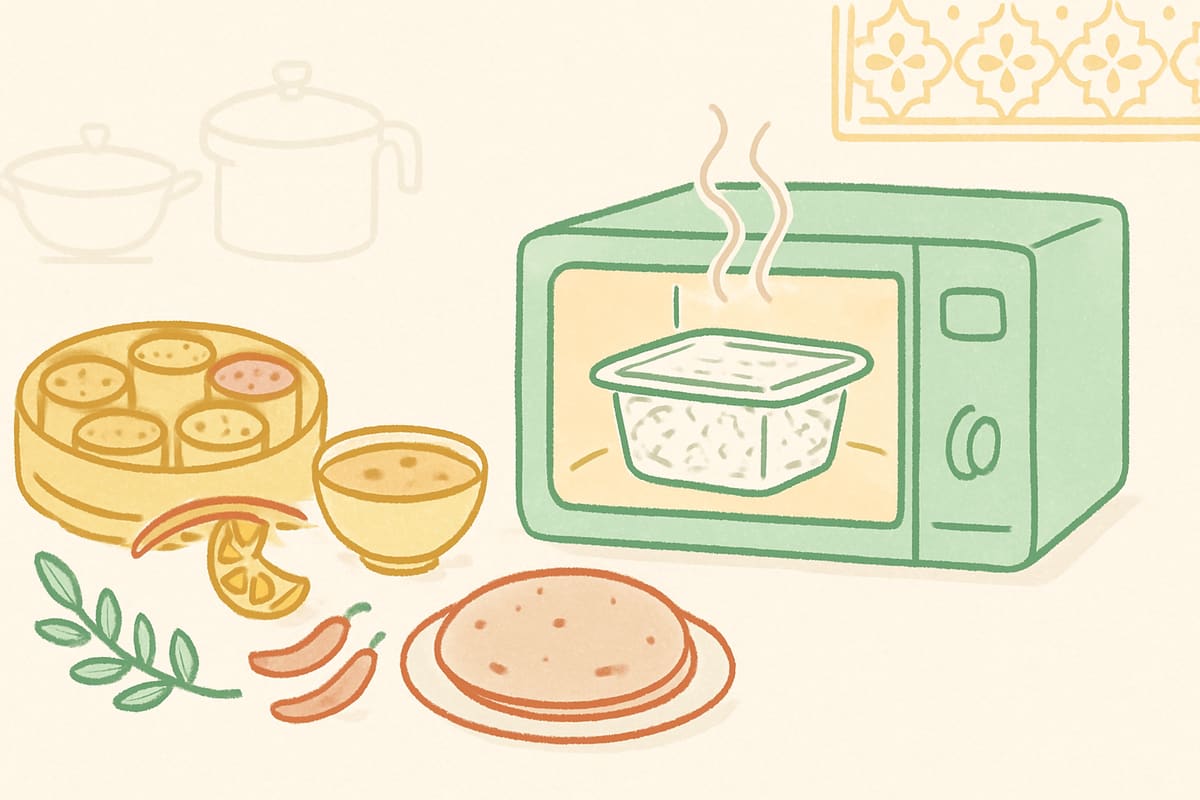
- Reheat thoroughly. When you reheat, make sure it's steaming hot all the way through — not just warm. Microwave with a splash of water and cover.
- Never reheat more than once. Each reheating cycle is a new opportunity for bacteria.
What about curd rice and fermented rice?
Curd rice (leftover rice mixed with curd) is actually safer than plain leftover rice because curd's acidity inhibits bacterial growth. South Indian curd rice traditions are accidentally food-safe.
Fermented rice (panta bhat, pazhaya sadam) — rice soaked in water overnight — goes through a lactic acid fermentation that produces beneficial bacteria and creates an acidic environment hostile to pathogens. Traditional wisdom beating modern food science again.
The fried rice exception
Leftover rice makes the best fried rice because it's drier. This is fine as long as the rice was refrigerated properly and you fry it at high heat. The high temperature of the wok kills most bacteria. But if the rice was sitting out overnight on the counter and then fried — the toxins produced by Bacillus cereus are heat-stable. Cooking won't destroy them.
Safe fried rice rule: Fridge within 1 hour → use within 24 hours → fry at high heat.
Quick answers
Asked and answered
Can I leave rice in the rice cooker overnight?
No. The "keep warm" setting on most cookers doesn't maintain a temperature high enough to prevent bacterial growth. Refrigerate leftover rice within an hour.
Is brown rice safer than white rice?
Same risk. Both contain Bacillus cereus spores. Brown rice actually retains more surface bacteria because of the bran layer. Same storage rules apply. ### My family has always eaten overnight rice and never got sick. Mild food poisoning from rice often gets mistaken for "upset stomach" or "something didn't agree with me." You might have had it more often than you think. Also, frequent exposure can build some tolerance — but the risk remains.