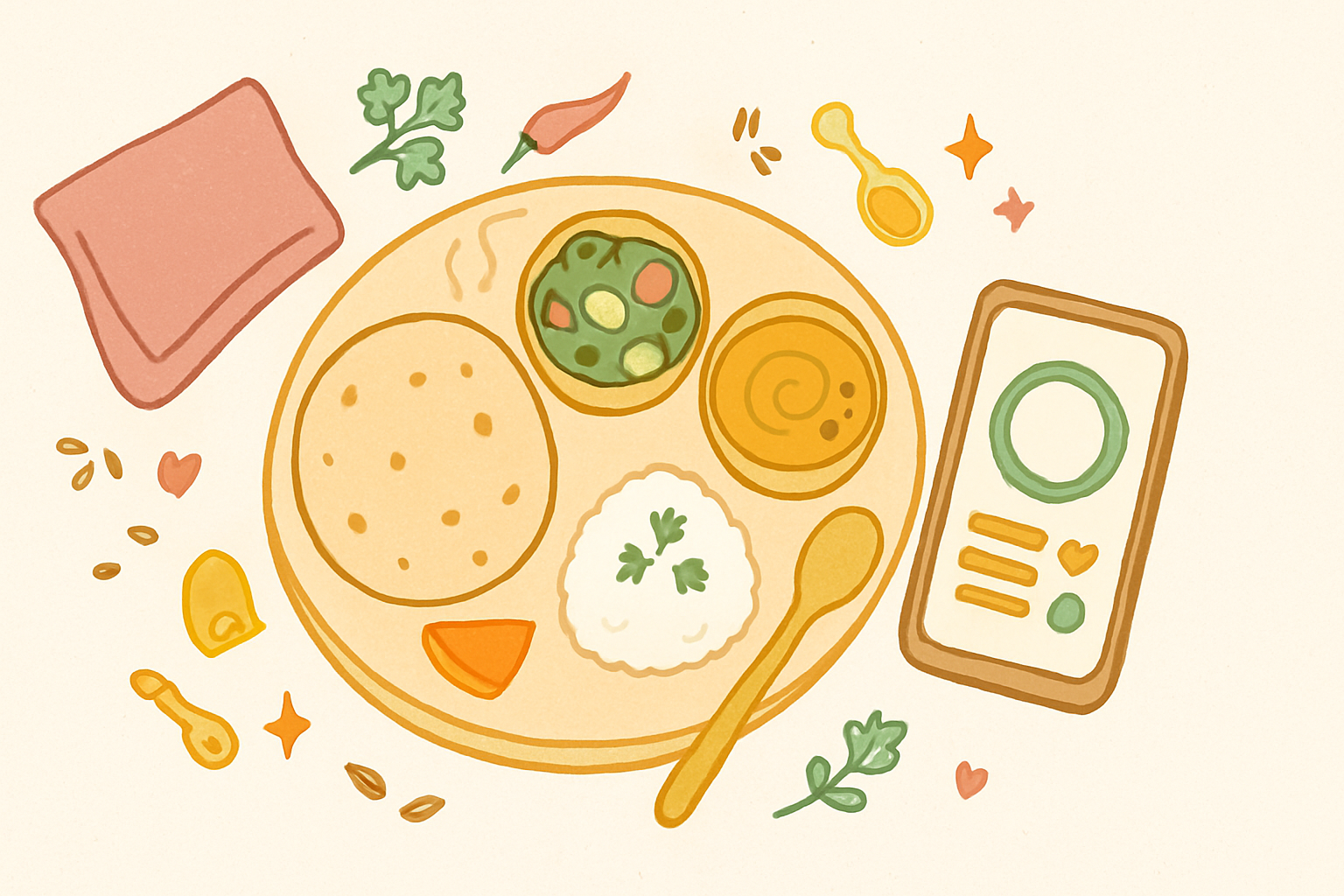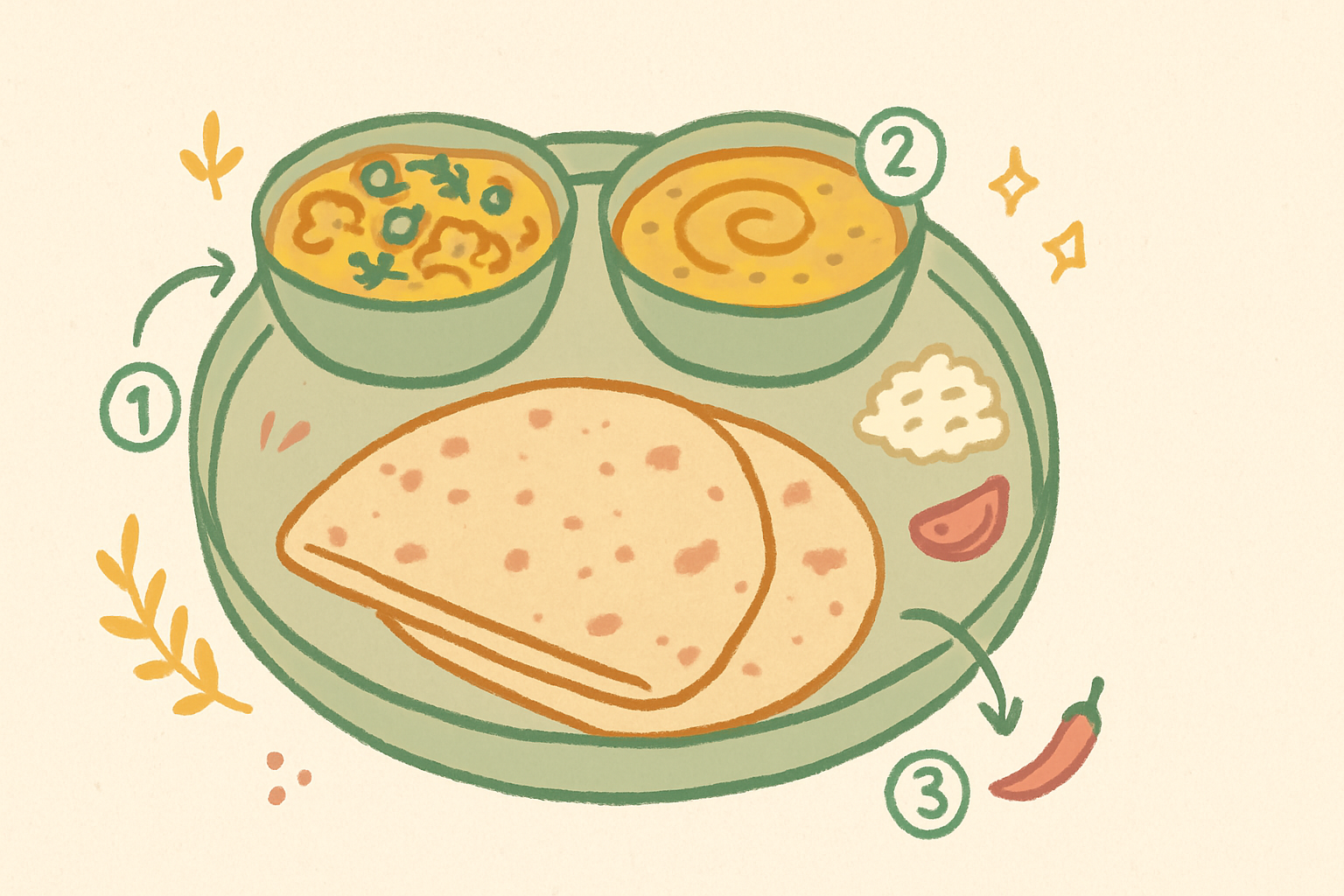
You sit down with a thali. Dal, sabji, roti, rice, raita, salad, maybe a pickle. Most people tear a roti, dip it in dal, and start there. Simple, delicious, wrong.
The science of meal sequencing
Research from Cornell and multiple diabetology journals shows that the order you eat food affects blood sugar by up to 30%. Eating vegetables and protein before carbs creates a fiber-and-protein buffer in your stomach. When the carbs (roti, rice) arrive later, they're absorbed more slowly.
Same food. Same calories. Just different order. 30% less blood sugar spike.
The ideal thali eating order
Step 1: Salad and raw vegetables Start with the salad — cucumber, onion, tomato, whatever is on the thali. The fiber creates a physical barrier in your stomach.
Step 2: Sabji (cooked vegetables) The bhindi, gobhi, palak, or whatever sabji you have. More fiber, more volume, and now your stomach is getting the message that food is arriving.
Step 3: Dal or protein Dal, paneer, chicken, egg curry — whatever your protein source is. Protein slows gastric emptying, meaning everything digests more evenly.
Step 4: Roti or rice (last) Now the carbs. By this point, your stomach has a cushion of fiber and protein. The roti or rice sits on top and absorbs slowly instead of spiking your blood sugar.
Step 5: Curd or raita End with curd. The probiotics aid digestion of everything you just ate. Traditional thali meals in South India end with curd rice for exactly this reason.
Who benefits most
Diabetics: This one change can meaningfully reduce post-meal blood sugar. Some studies show it's as effective as a low dose of medication.
Weight loss: You eat more vegetables and protein first, naturally eat less roti and rice, and feel fuller on fewer carbs.
Everyone: Less post-meal sleepiness, less bloating, more stable energy through the afternoon.
The practical reality
You're not going to eat your entire salad in silence before touching anything else. That's unrealistic. But even a rough approximation helps:
- Take a few bites of sabji and salad first
- Eat dal with your first roti (instead of starting with plain roti + ghee)
- Save the rice for the end
- Finish with curd
This isn't a strict rule. It's a gentle sequence that your body will thank you for.
Frequently Asked Questions
Does this work with biryani?
Biryani is pre-mixed, so sequencing is hard. But having a salad or raita before the biryani still helps. The fiber and protein from raita slow down the rice absorption.
Should I eat sweet dish (mithai) at the end?
If you're having dessert, the worst time is after carbs (roti/rice) — sugar on sugar. The best time for a small sweet is actually between the protein and carbs course, or skip it entirely. But let's be real — once in a while is fine. Just keep it small.
Does this apply to South Indian meals too?
Absolutely. Start with sambar or kootu (vegetable/dal dishes), then rasam, then rice. End with curd rice. South Indian meal traditions already follow this sequence naturally — rice comes last after multiple courses.