Mummy says eat fruit on empty stomach. The internet says eat it before meals. Your gym trainer says avoid fruit entirely. Everyone is partially right and mostly confusing.
The short answer
Eat fruit as a snack between meals — not immediately after a heavy meal. That's the best timing for most people. Here's why.
Why fruit right after meals is a bad idea
You just had rajma chawal and 2 rotis. Your stomach is full and working hard. Now you add a mango on top.
What happens: the fruit sits on top of the heavy food, ferments faster than it should (because it digests quicker than grains and protein), and produces gas. That bloating you feel 30 minutes after lunch? It's often the fruit, not the meal.
Fruit digests in 30-45 minutes. Dal and rice take 2-3 hours. When they're mixed together, the fruit is trapped behind slow-digesting food and starts fermenting.
The ideal fruit timing
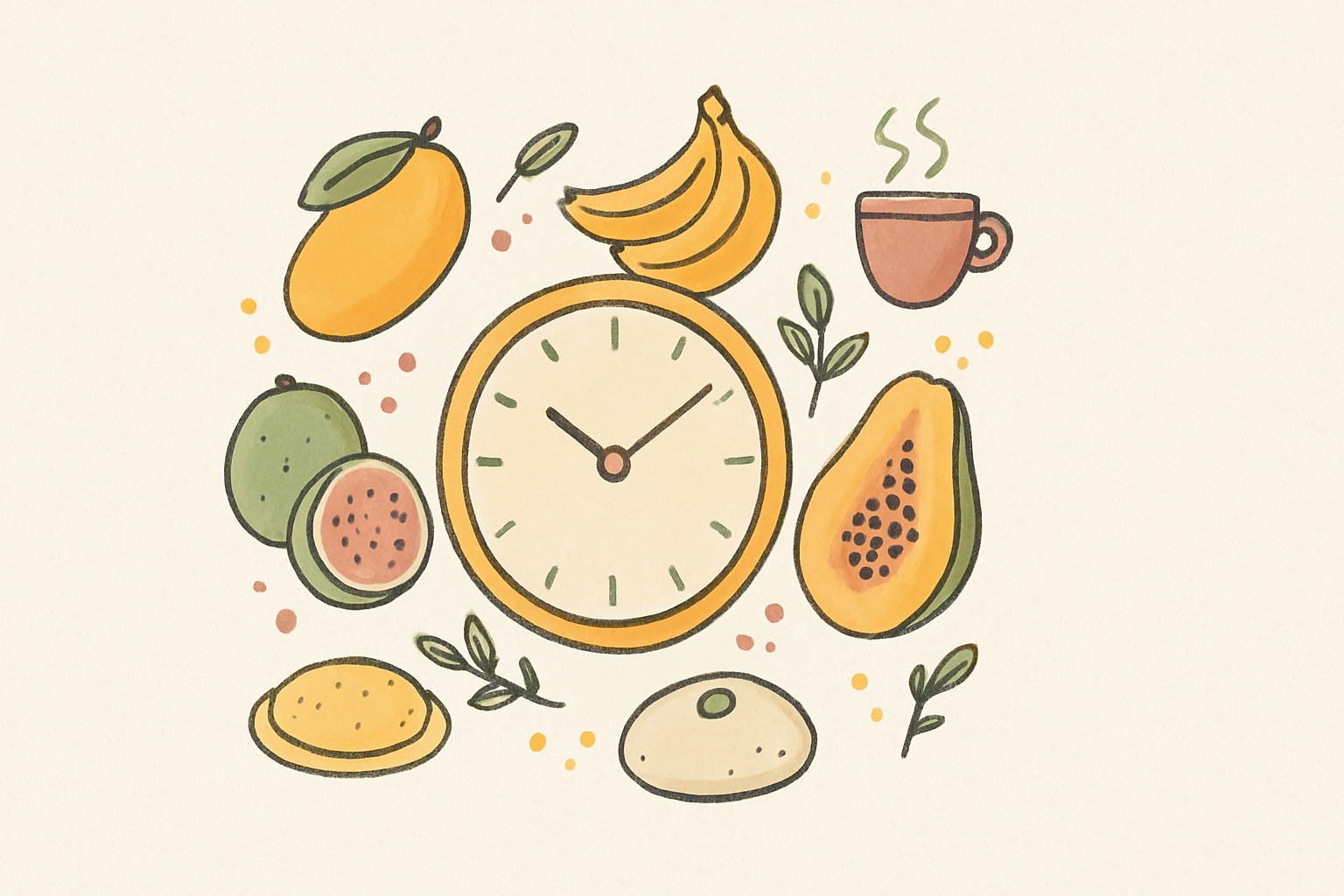
As a mid-morning or mid-afternoon snack — 2 hours after your last meal, 1 hour before your next meal. Your stomach is relatively empty, the fruit digests quickly and smoothly, and you get the nutrients without the gas.
Good fruit snack times:
- 10-11 AM (between breakfast and lunch)
- 4-5 PM (between lunch and dinner)
Fruit on empty stomach — the morning debate
It's fine. Your stomach handles fruit easily when empty. The "fruit on empty stomach causes acidity" claim is mostly a myth — fruit is mildly acidic but your stomach acid is 100x stronger. Most people feel great starting the day with fruit.
Best morning fruits: Banana (easy energy), papaya (digestive enzymes, great for gut), apple (fiber), guava (highest fiber of any common fruit — 5g per fruit).
Avoid on empty stomach if you have gastritis: Citrus fruits (orange, mosambi) can irritate an already inflamed stomach lining. Eat banana or papaya instead.
Fruit and diabetes
If you have diabetes, timing matters more:
- Never eat fruit with a heavy carb meal — the combined sugar load spikes blood sugar
- Pair fruit with protein — apple slices with peanut butter, banana with a handful of almonds. The protein slows sugar absorption
- Choose low-GI fruits — guava, apple, papaya, pear over mango, grapes, banana
- Limit to 1-2 servings per day — one serving = 1 medium fruit or 1 cup chopped
Fruit and weight loss
Fruit is not the enemy of weight loss. A banana has 100 calories and keeps you full. A samosa has 260 calories and makes you hungry again in an hour. The fruit wins every time.
The only issue is juice. Whole fruit = good. Fruit juice = bad. Juice removes the fiber that slows sugar absorption. One glass of orange juice has the sugar of 3 oranges without any of the fiber. Eat the fruit, don't drink it.
The gut health angle
Fruits are prebiotic powerhouses. The fiber — especially pectin in apples and resistant starch in bananas — feeds your gut bacteria. Different fruits feed different bacteria, so variety matters. Don't eat only bananas — rotate between whatever's in season.
Papaya is special: it contains papain, a digestive enzyme that helps break down protein. Eating papaya as a mid-morning snack can actually improve how you digest your lunch.
Frequently Asked Questions
Can I eat mango during weight loss?
Yes — in moderation. One small mango (about 150g) has roughly 100 calories. That's fine as a snack. The problem is eating 2-3 mangoes after dinner. Enjoy one as your afternoon snack instead.
Is banana good at night?
Fine for most people. The tryptophan in bananas can actually help sleep. Avoid if you have diabetes and eat it too late — the sugar may affect overnight blood sugar.
Which fruit has the most fiber?
Guava — about 5g per fruit. Then apple (2.5g), banana (2.5g), and pear (3g). For gut health, guava is king.