
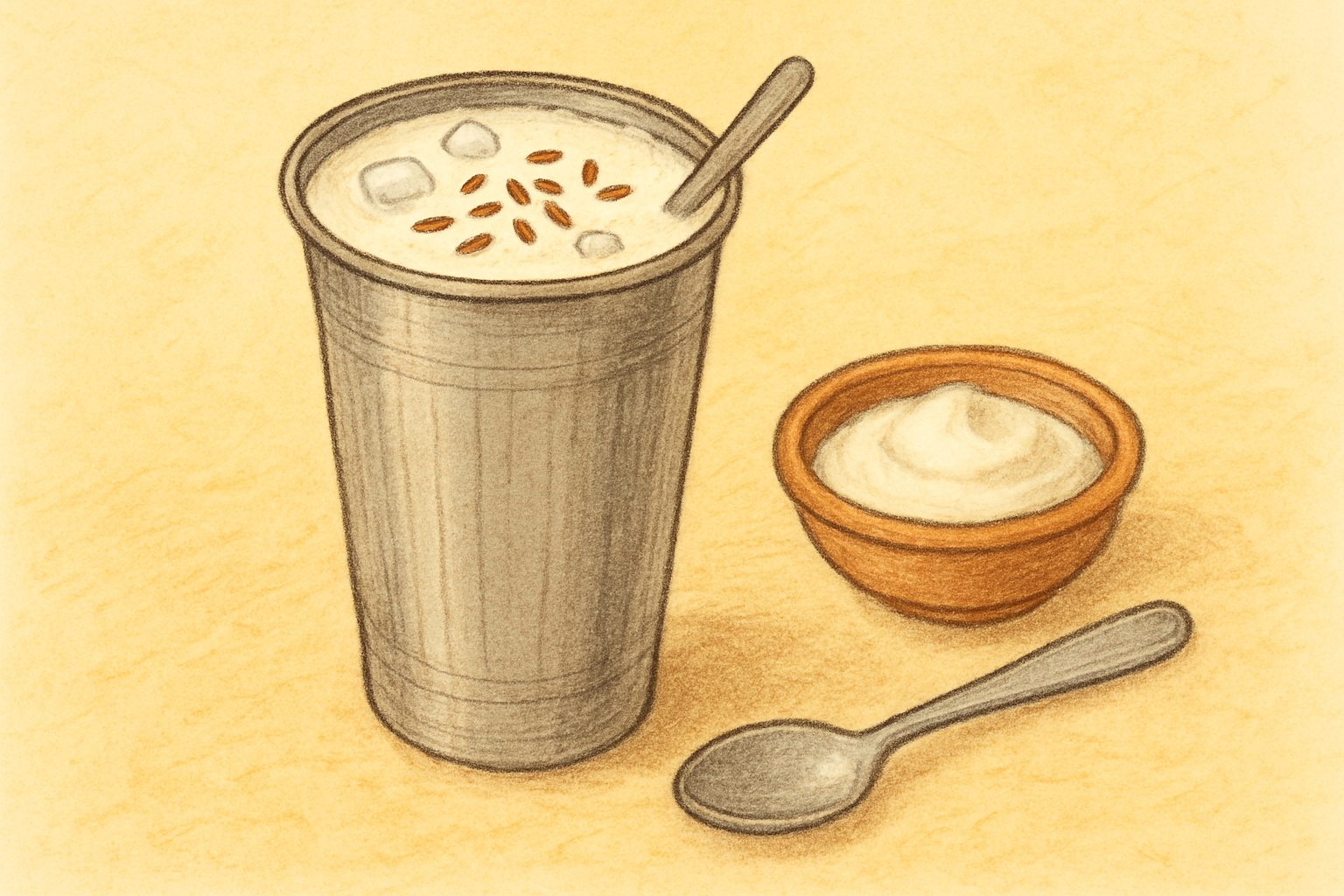
Lassi (salted)
Also called: salted lassi, lassi (salted), namak wali lassi, namkeen lassi, salt lassi, namak wali lassi, chaach (salted), salty lassi
Salted lassi is that classic nimbu-gully, dhaba-style summer drink — cool, creamy, and super refreshing. Made with curd, a bit of jeera, and namak, it’s the kind of thing you’ll happily sip with lunch, especially when the weather is scorching or the meal is a little heavy.
Per 1 tall glass (250g)
Nutrition Facts
| Nutrient | Per tall glass (250g) | Per 100g |
|---|---|---|
| Calories | 47 kcal | 18.8 kcal |
| Protein | 3.5g | 1.4g |
| Carbohydrates | 4.8g | 1.9g |
| Fat | 1.8g | 0.7g |
| Fiber | 0g | 0g |
| Sugar | 4.5g | 1.8g |
| Micronutrients (per 100g) | ||
| Sodium | 65.4 mg | |
| Calcium | 47.78 mg | |
| Iron | 0.04 mg | |
| Vitamin C | 1.02 mg | |
| Folate | 18.07 µg | |
What Goes Into It
Per serving (1 tall glass)
gastroenterology Gut Health Insight
Because it’s made from curd, salted lassi brings in natural probiotics that can support gut bacteria and feel soothing after a spicy or oily meal. The cumin (jeera) can help with bloating and that heavy-pet feeling, while the salt helps replace a little sodium lost in sweat on hot days. Since it has almost no fiber, it works best alongside a meal that has roti, sabzi, or salad — that combo keeps digestion more balanced.
From the Shellel Blog
Want to track Lassi (salted) in your daily meals?
Just say "Lassi (salted)" in Shellel and get instant macros.
download Get Shellel FreeNutrition data sourced from ICMR-NIN Indian Food Composition Tables (IFCT) and the Indian Nutrient Database (INDB 2024). Values are per standard serving and may vary with preparation method.