The Problem With Calorie Counting in South Asia
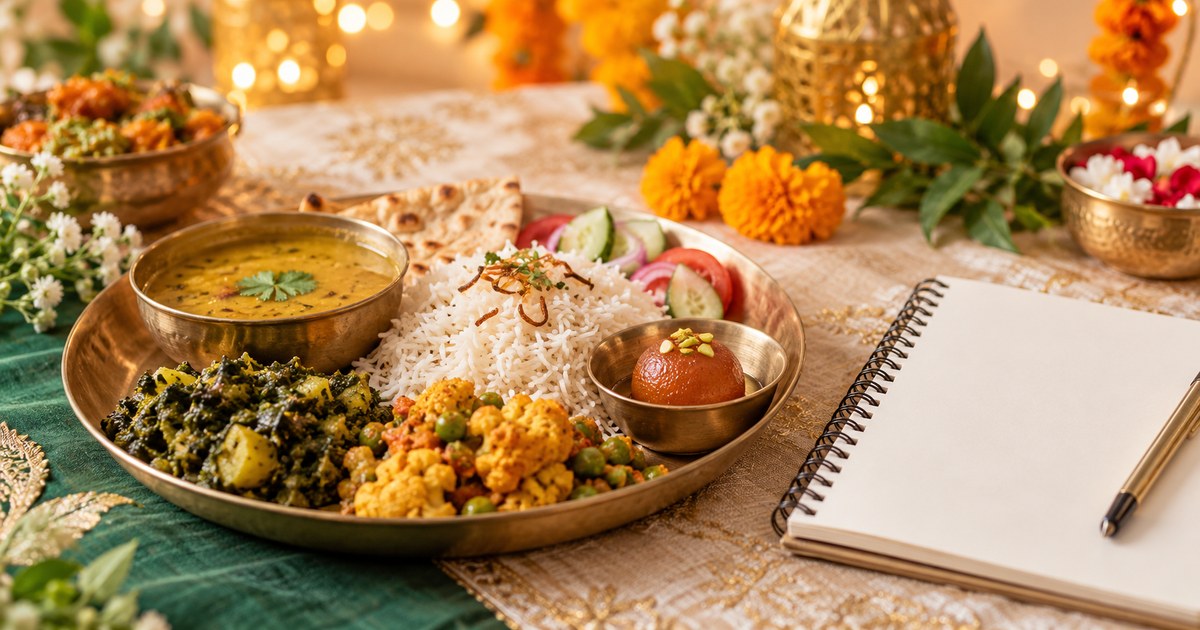
Western calorie trackers are built for "1 cup of Greek yogurt" and "4 oz grilled chicken breast." That doesn't help when your lunch is "rice, dal, aloo sabzi, and a bit of pickle" served from a communal pot by your mom.
Desi food is cooked in batches, served by hand, and nobody measures anything. But you can still track it. Here's how.
The 4 Components of Any Desi Meal
Every desi meal is basically:
- Base carb — roti, rice, paratha, naan
- Protein dish — dal, chicken, paneer, fish, egg
- Sabzi/side — aloo, bhindi, gobhi, mixed veg
- Extras — dahi, pickle, salad, papad
Estimate each component separately, then add them up.
Component 1: Base Carbs
| Item | "1 serving" | Calories |
|---|---|---|
| Roti/chapati | 1 medium (30g atta) | 100 cal |
| Paratha | 1 medium | 220 cal |
| Cooked rice | 1 katori/cup (150g) | 200 cal |
| Naan | 1 medium | 260 cal |
The rice trap: A "plate" of rice at home is often 2-3 cups (400-600 cal). Use a katori/cup to measure — one cup = 200 cal.
Component 2: Protein Dishes
| Item | 1 katori/bowl | Calories | Protein |
|---|---|---|---|
| Dal (any) | 200g cooked | 120 cal | 8g |
| Chicken curry | 150g (2 pieces + gravy) | 250 cal | 20g |
| Egg curry | 2 eggs + gravy | 250 cal | 14g |
| Paneer sabzi | 100g paneer in gravy | 300 cal | 16g |
| Fish curry | 1 piece + gravy | 200 cal | 18g |
| Rajma/chole | 200g cooked | 170 cal | 9g |
| Keema | 150g | 250 cal | 20g |
Component 3: Sabzi/Sides
| Item | 1 katori | Calories |
|---|---|---|
| Aloo sabzi (dry) | 150g | 150 cal |
| Bhindi (dry) | 150g | 100 cal |
| Mixed veg (dry) | 150g | 120 cal |
| Gobi sabzi | 150g | 110 cal |
| Baingan bharta | 150g | 130 cal |
| Palak (dry) | 150g | 80 cal |
| Raita | 100g | 60 cal |
The oil factor in sabzi: These numbers assume 1-2 tsp oil per serving. If your sabzi is swimming in oil, add 100-200 cal.
Component 4: Extras
| Item | Portion | Calories |
|---|---|---|
| Dahi/curd | 1 katori (100g) | 60 cal |
| Pickle | 1 tbsp | 30 cal |
| Papad (roasted) | 1 | 40 cal |
| Papad (fried) | 1 | 90 cal |
| Salad | 1 bowl | 20 cal |
| Ghee on roti | 1 tsp | 40 cal |
Putting It Together: Example Meals
Simple lunch at home
- 2 roti (200) + 1 bowl dal (120) + aloo sabzi (150) + salad (20) = 490 cal
Rice meal
- 1 cup rice (200) + chicken curry (250) + raita (60) = 510 cal
Heavy Punjabi/Pakistani meal
- 2 aloo paratha (560) + butter (100) + dahi (60) + pickle (30) = 750 cal
Light Bengali meal
- 1 cup rice (200) + fish jhol (180) + dal (120) + shak (80) = 580 cal
The Oil Rule of Thumb
This is the #1 hidden calorie source in desi cooking:
- 1 tsp oil = 40 cal
- 1 tbsp oil = 120 cal
- Most home sabzis use 2-3 tbsp for the whole batch (serves 4) = 60-90 cal of oil per serving
- Restaurant/dhaba curries use 4-6 tbsp per batch = 120-180 cal of oil per serving
If the curry has a layer of oil on top, add 100 cal to your estimate.
The Easiest Way: Just Type It
Instead of calculating all this manually, type your meal in plain language:
"2 roti, dal, aloo sabzi, dahi"
Shellel's AI breaks it down automatically. It understands desi food names, typical portions, and cooking methods.
Quick answers
Asked and answered
How do I track when I eat from a shared pot?
Estimate your portion in katoris (bowls). 1 katori = 150-200g of cooked food. That's your unit of measurement.
What about oil in cooking?
If you cooked it, you know how much oil went in. Divide by number of servings. If someone else cooked it: 1 tsp per serving for dry sabzi, 1 tbsp per serving for curry.
My mom's food tastes different — are the calories the same?
If she uses more ghee/oil or sugar, the calories go up. The base ingredients are the same, but cooking fat is the variable. A sabzi with 1 tbsp vs 3 tbsp oil differs by 240 cal. --- Start tracking now — Shellel's calorie checker understands desi food better than any other app.