Quick Answer
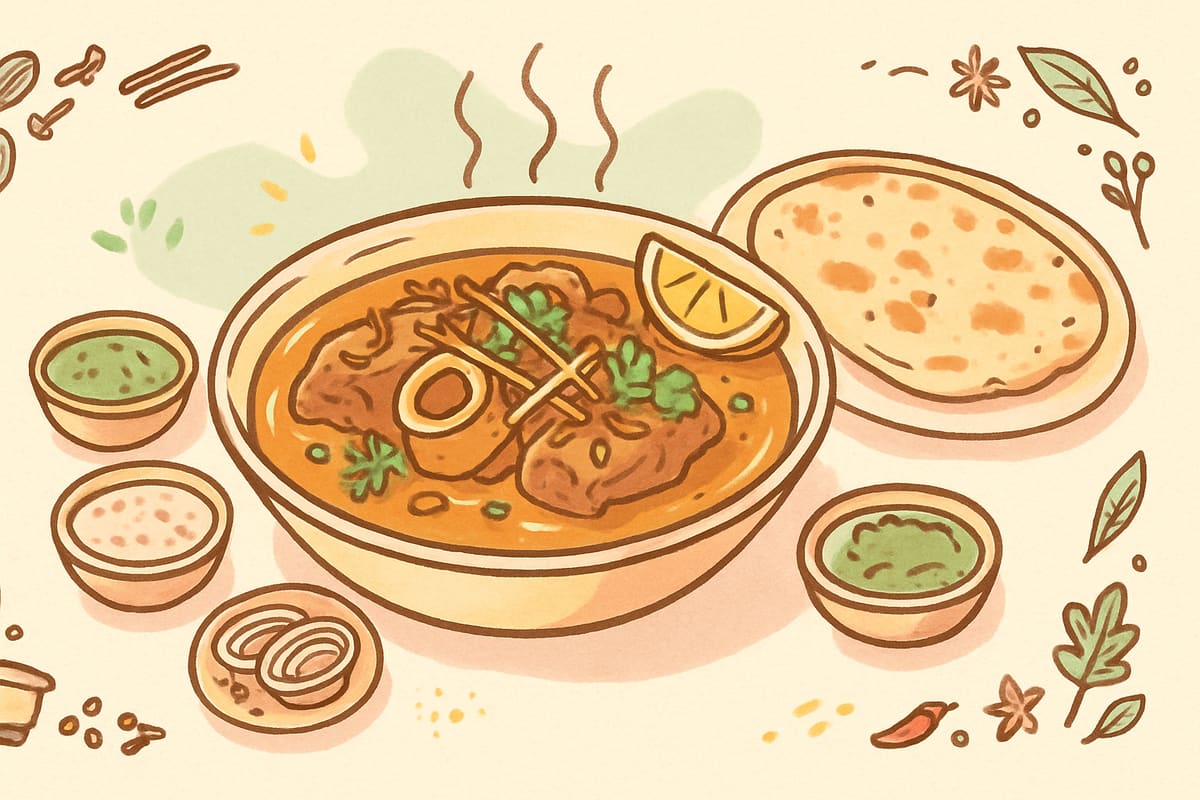
One bowl of nihari (250g, with gravy) has approximately 400-500 calories, 28-35g protein, and 25-35g fat. The exact count depends on the meat used, how much oil/ghee is added, and whether it's homemade or from a restaurant.
Nihari Nutrition Per Serving
| Nutrient | Homemade (250g) | Restaurant (250g) |
|---|---|---|
| Calories | 400 cal | 550 cal |
| Protein | 30g | 28g |
| Fat | 25g | 40g |
| Carbs | 12g | 15g |
| Fiber | 2g | 2g |
Why the difference? Restaurant nihari uses significantly more ghee and bone marrow fat. Some famous nihari houses in Lahore and Karachi use up to 4-5 tablespoons of ghee per serving.
Nihari Nutrition Per 100g
| Nutrient | Amount |
|---|---|
| Calories | 170 cal |
| Protein | 12g |
| Fat | 11g |
| Carbs | 5g |
What's Actually in Nihari?
Nihari is a slow-cooked stew, traditionally simmered overnight. The base:
- Beef shank or bone-in meat — the primary protein. Slow cooking breaks down collagen into gelatin, which is why the gravy is thick.
- Wheat flour (atta) — used to thicken the gravy. Adds ~50 cal per tablespoon.
- Ghee/oil — the biggest calorie variable. Each tablespoon = 120 cal.
- Bone marrow (nalli) — rich in fat. One piece adds ~80-100 cal.
- Spice mix — nihari masala, ginger, chili. Negligible calories.
How Nihari Compares to Other Pakistani Curries
| Dish | Calories (1 bowl) | Protein |
|---|---|---|
| Nihari (beef) | 450 cal | 30g |
| Chicken korma | 350 cal | 22g |
| Mutton korma | 400 cal | 25g |
| Haleem | 350 cal | 18g |
| Paya | 380 cal | 25g |
| Chicken karahi | 300 cal | 24g |
| Aloo gosht | 350 cal | 20g |
Nihari is among the higher-calorie options because of the ghee and bone marrow, but it's also one of the highest in protein.
The Naan Problem
Nobody eats nihari alone. One bowl of nihari + 2 naan = 450 + 520 = 970 calories for one meal. That's more than half a day's budget for most people.
Better combos:
- Nihari + 1 roti (not naan) = 450 + 100 = 550 cal
- Nihari + 1 naan = 450 + 260 = 710 cal (still a lot, but manageable as your main meal)
- Half portion nihari + 1 roti + salad = 225 + 100 + 30 = 355 cal
Can You Eat Nihari on a Diet?
Yes, with adjustments:
- Have it as your main meal — if you eat nihari for lunch, eat lighter at dinner (dal + roti)
- Skip the bone marrow — saves 80-100 cal per piece
- Roti over naan — saves 160 cal per bread
- Homemade with less ghee — use 1 tbsp instead of 3-4. You save 240-360 cal without losing the flavor. The slow cooking does the work, not the ghee.
- Track it — type "1 bowl nihari with 1 roti" into Shellel's calorie checker and see your exact breakdown
Nihari After a Workout
If you train, nihari is a protein-rich meal:
- 30g protein per bowl (beef + collagen from bones)
- Rich in iron and zinc (from red meat)
- Collagen and glycine from slow-cooked bones
Pair it with 1-2 rotis post-workout and you've got a filling post-workout meal. Just watch the total fat if you're on a calorie budget.
Quick answers
Asked and answered
How many calories in nihari from a restaurant?
Approximately 500-600 calories per bowl. Restaurant versions use more ghee, oil, and bone marrow than homemade. Some Karachi-style niharis can go up to 700 cal with extra nalli.
Is nihari healthy?
In moderation, yes. It's high in protein (30g), rich in collagen (from slow-cooked bones), and contains iron and zinc. The main concern is fat content from ghee and marrow. Having it 1-2 times per week as your main meal is fine.
What's healthier — nihari or biryani?
Nihari has more protein (30g vs 20g) but similar calories. Biryani has more carbs from rice. If you want protein, nihari wins. If you want a balanced meal, biryani with raita is easier to portion.
How many calories in nalli nihari?
Nalli (bone marrow) adds 80-100 calories per piece. A nalli nihari bowl with 2 pieces of marrow = 550-650 cal. --- Want to track your Pakistani meals automatically? Try Shellel's calorie checker — just type what you ate in plain English.