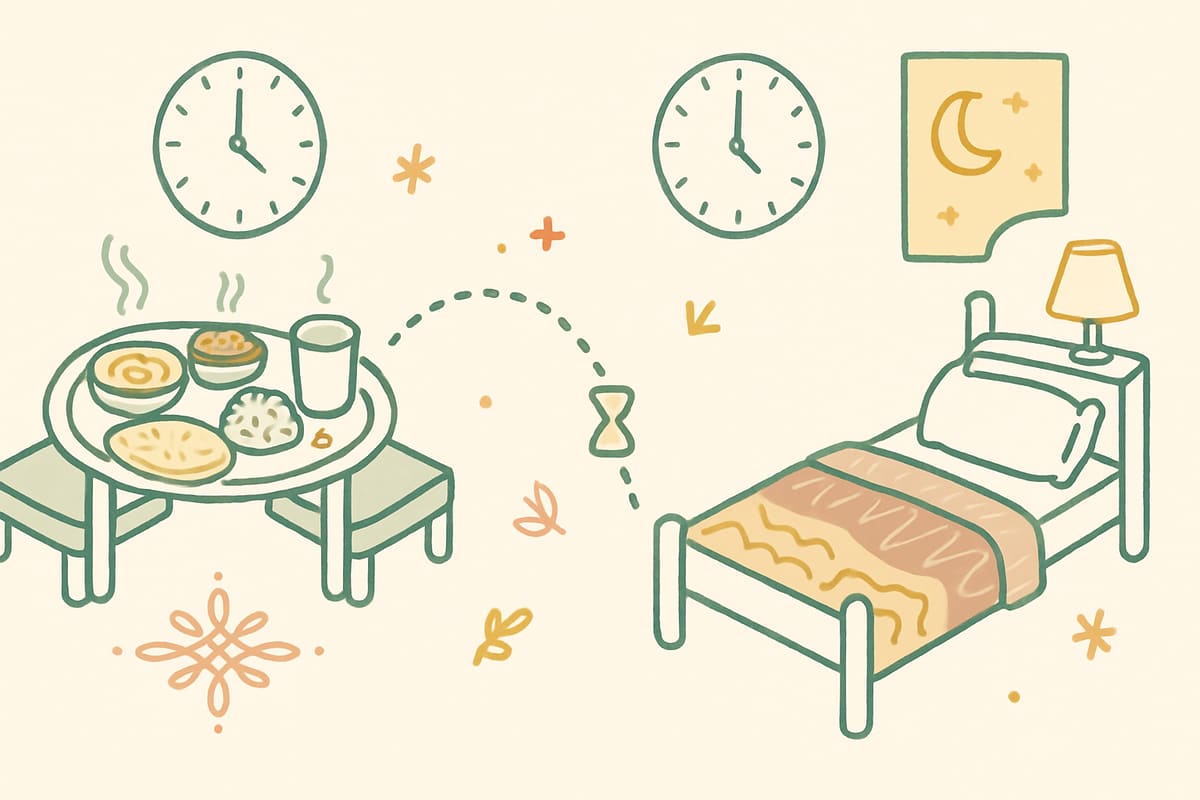
6 AM. Shoes on. But do you eat first or walk first?
Before breakfast (fasted walk)
Some people feel light and energetic walking before breakfast. If you wake up without much appetite, a short walk first thing is an easy habit to build.
Best for: people who feel light and energetic in the morning without food.
Not great for: people who feel dizzy without food, high-intensity exercisers, and anyone with a health condition — check with your doctor first.
After breakfast (fed walk)
You have more energy, can walk longer, and won't feel lightheaded. Your muscles have glucose available, so you feel stronger.
Best for: people who do longer walks (45+ minutes), people who feel weak without food.
The Indian middle ground
Here's what actually works for most Indians:
- Wake up → glass of warm water
- 5-10 minutes later → start walking (fasted)
- Walk for 20-30 minutes at a comfortable pace
- Come home → eat breakfast (poha, idli, paratha, whatever you normally eat)
If you feel dizzy or weak walking fasted, eat 4-5 almonds or half a banana before stepping out. That's enough fuel to get going.
A gentle start to the day
Many people simply enjoy a morning walk as a calm start to the day, whether it comes before or after breakfast.
Quick answers
Asked and answered
Can I drink chai before morning walk?
A small cup of chai (without sugar) is fine. But chai on empty stomach can cause acidity for some people. If that's you, eat something small first.
How long should a morning walk be?
20-30 minutes of brisk walking is a good place to start; some people prefer 40-60 minutes. Consistency matters more than duration.
Is running better than walking?
Running burns more calories per minute, but walking is sustainable. Most people can walk every day; most can't run every day. The exercise you actually do beats the exercise you plan to do.