
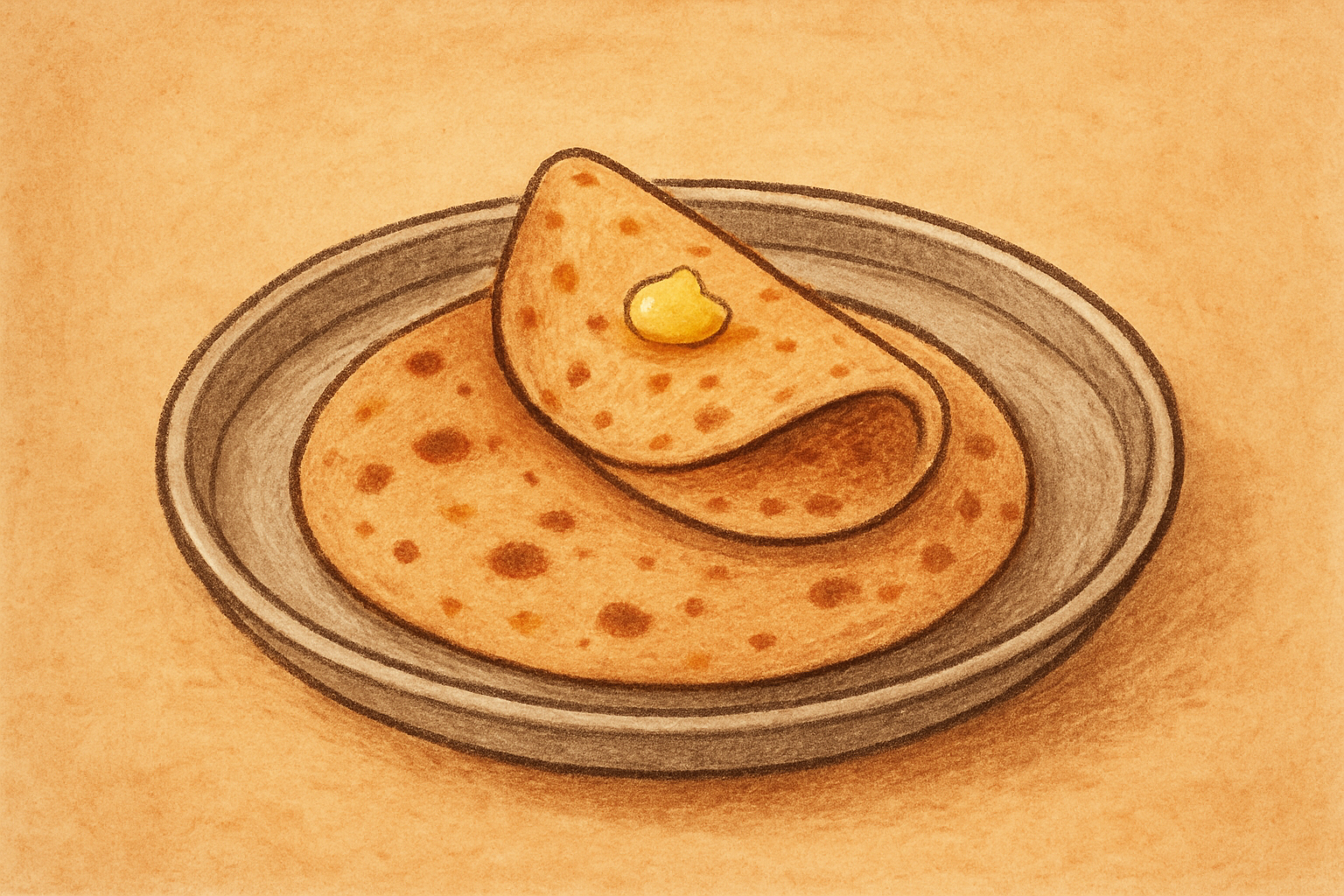
Chapati/Roti
Also called: chapati, roti, phulka, roti (chapati), chapati/roti, chapatti, rotie, phulka roti, chapati roti
Chapati or roti is that everyday Indian staple that shows up in almost every home, from mom’s hot tawa-roti at lunch to a simple dinner with dal and sabzi. Soft, warm, and just a little ghee on top, it’s comfort food in the most familiar way.
Per 1 chapati (40g)
Nutrition Facts
| Nutrient | Per chapati (40g) | Per 100g |
|---|---|---|
| Calories | 80.9 kcal | 202.3 kcal |
| Protein | 2.4g | 5.9g |
| Carbohydrates | 14.2g | 35.6g |
| Fat | 1.4g | 3.6g |
| Fiber | 2.5g | 6.3g |
| Sugar | 0.4g | 1g |
| Micronutrients (per 100g) | ||
| Sodium | 1.16 mg | |
| Calcium | 17.22 mg | |
| Iron | 2.28 mg | |
| Vitamin C | 0 mg | |
| Folate | 5.84 µg | |
What Goes Into It
Per serving (1 chapati)
gastroenterology Gut Health Insight
Chapati brings a nice bit of fiber from whole wheat, which helps keep digestion moving and supports regular bowel movements. Since it’s made from atta, it’s a steadier carb than maida-based breads, so it usually feels gentler on the gut and gives more lasting fullness. The small amount of ghee can help make it easier to digest for some people and also adds a little richness. Best tip: pair your roti with dal, sabzi, or curd so the meal gets more fiber and is easier on your stomach than roti alone.
From the Shellel Blog
Want to track Chapati/Roti in your daily meals?
Just say "Chapati/Roti" in Shellel and get instant macros.
download Get Shellel FreeNutrition data sourced from ICMR-NIN Indian Food Composition Tables (IFCT) and the Indian Nutrient Database (INDB 2024). Values are per standard serving and may vary with preparation method.