AI-assisted. Edited by Aman Singh, Founder.
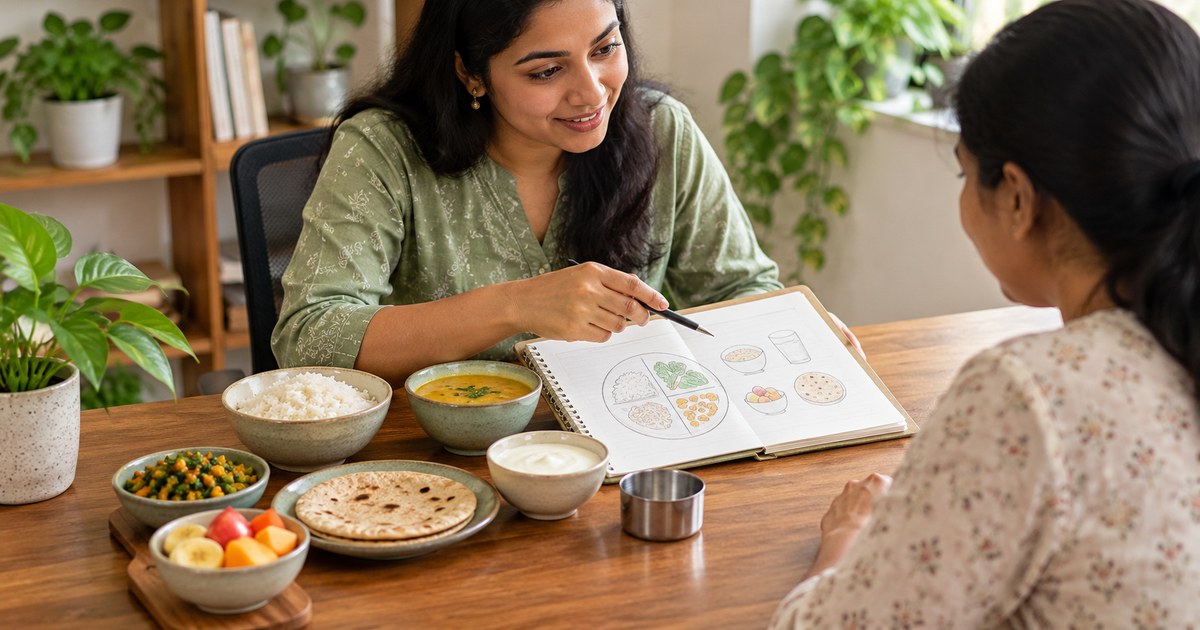
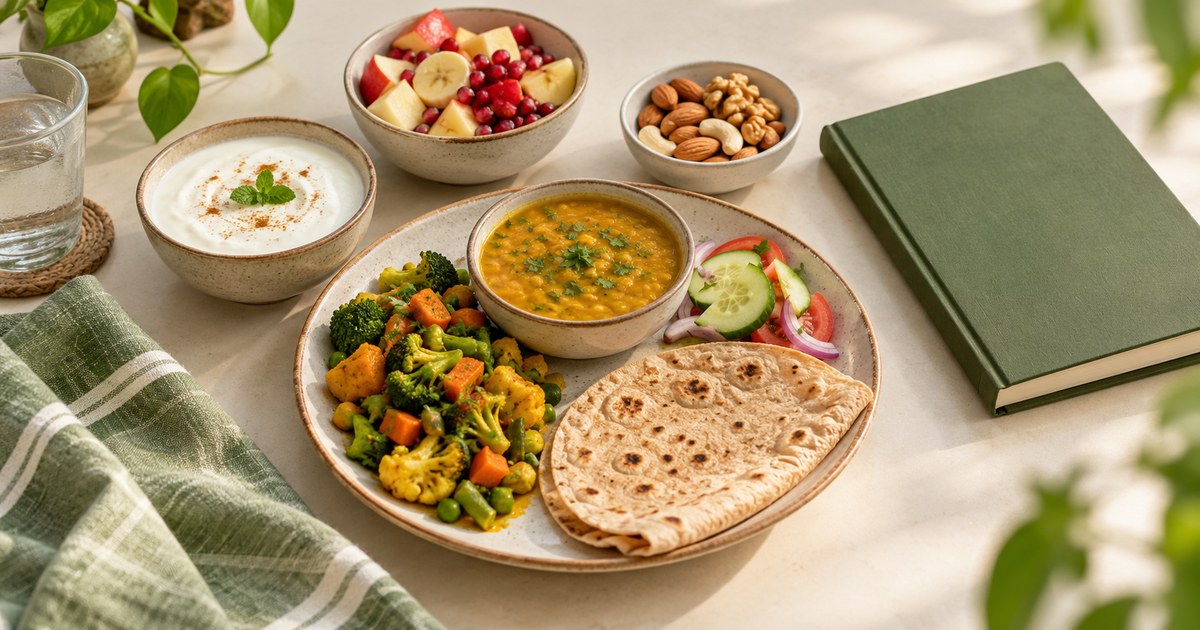
Carb counting with Indian foods for diabetes clients begins with the person’s clinical plan and the foods they actually eat. For a dietitian, the practical challenge is often translating “do roti and one katori dal” into a transparent estimate without treating a household measure as a laboratory measurement.
Agree the purpose of counting
The American Diabetes Association describes different approaches to carbohydrate counting, including gram counting and carbohydrate choices. The appropriate approach depends on treatment and individual needs. Agree the method with the diabetes care team before teaching it. This article supplies no insulin ratio, medication adjustment or universal carbohydrate target.
Start with a checked food and portion
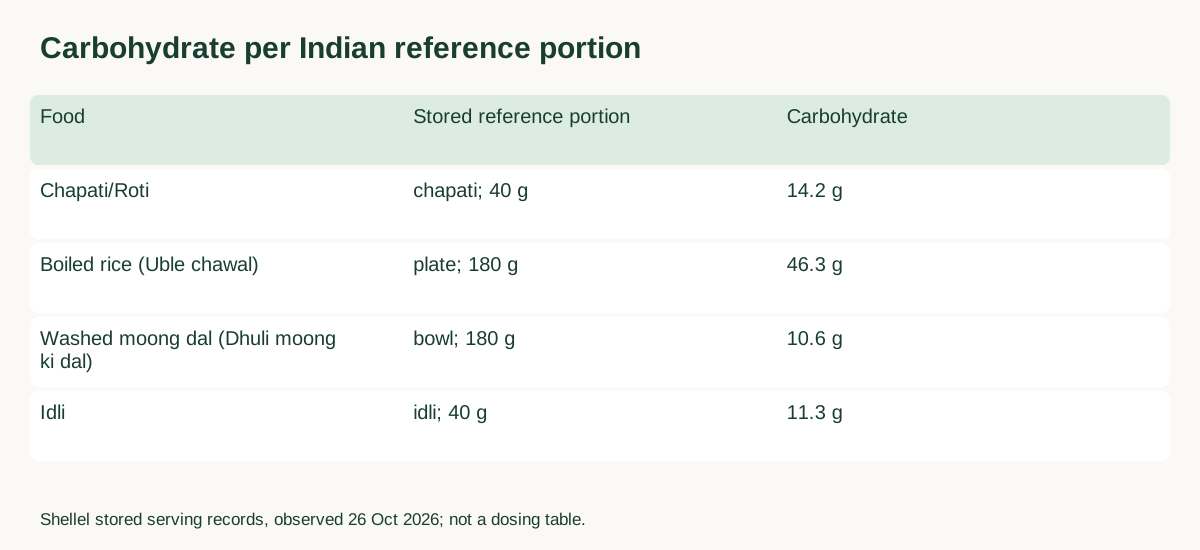
| Food | Stored reference portion | Carbohydrate |
|---|---|---|
| Chapati/Roti | chapati; 40 g | 14.2 g |
| Boiled rice (Uble chawal) | plate; 180 g | 46.3 g |
| Washed moong dal (Dhuli moong ki dal) | bowl; 180 g | 10.6 g |
| Idli | idli; 40 g | 11.3 g |
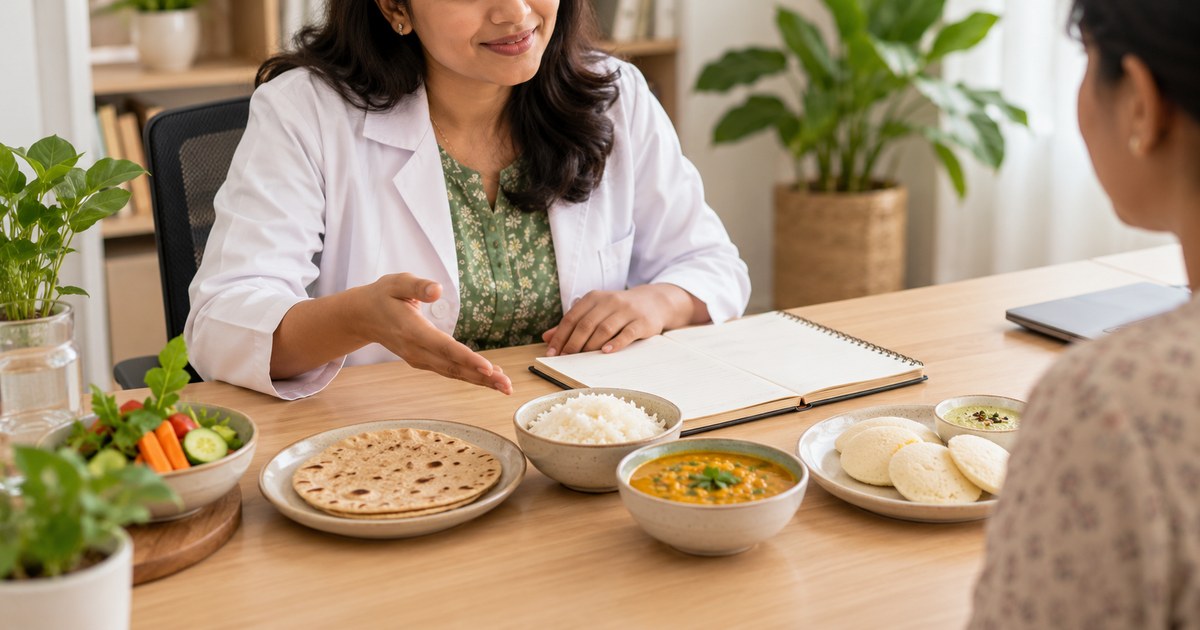
The table contains Shellel stored food-record estimates observed on 26 October 2026, not IFCT measurements of these cooked meals. The rice reference is a 180 g plate; it is not a claim that every katori holds 180 g. Calibrate the client’s own katori if the weight matters. Check dal dilution, tadka and the recipe before reusing a reference.
Work through a real description together
Ask what “roti” means in that home: wheat or another flour, approximate size and additions. Open the wheat-roti reference while preserving the piece weight. Keep makki ki roti separate. For idli, check mini versus regular pieces and accompaniments. Chicken biryani is a mixed dish and needs its own portion and recipe context.
Write the food, estimated amount and source beside the calculation. Multiply only when the reference portion matches reasonably. If the client cannot recall a weight, record that limitation rather than requiring a fabricated gram entry. Agree which details would help at the next review.
Do not mix carbohydrate definitions
Food labels and composition references can describe carbohydrate differently. Before calculating, confirm the source convention and the method agreed with the treating team. Do not automatically subtract fibre from an Indian food record or use its sugar value as the whole carbohydrate value.
Use the exchange-list worksheet for teaching a consistent portion language. The GI chart addresses a different question and does not replace carbohydrate quantity or the clinical plan.
Bring the reference into a client diary
Use the Indian food database guide for dietitians to understand the record behind an estimate. When the practical task is a plan, try the diet chart maker. For shared diary review, see how a practice gets started. Keep your clinical assessment and the client’s own account alongside any database match.
Quick answers
Asked and answered
Is one carbohydrate allowance suitable for all diabetes clients?
No. The practitioner and treating team should select the approach and targets for the individual. This reference provides portion examples, not a treatment prescription.
Can a food photo establish the carbohydrate grams?
It can help identify foods and discuss the portion, but recipe, weight and ingredients may remain uncertain. Keep those uncertainties in the record and follow the existing care plan.