AI-assisted. Edited by Aman Singh, Founder.
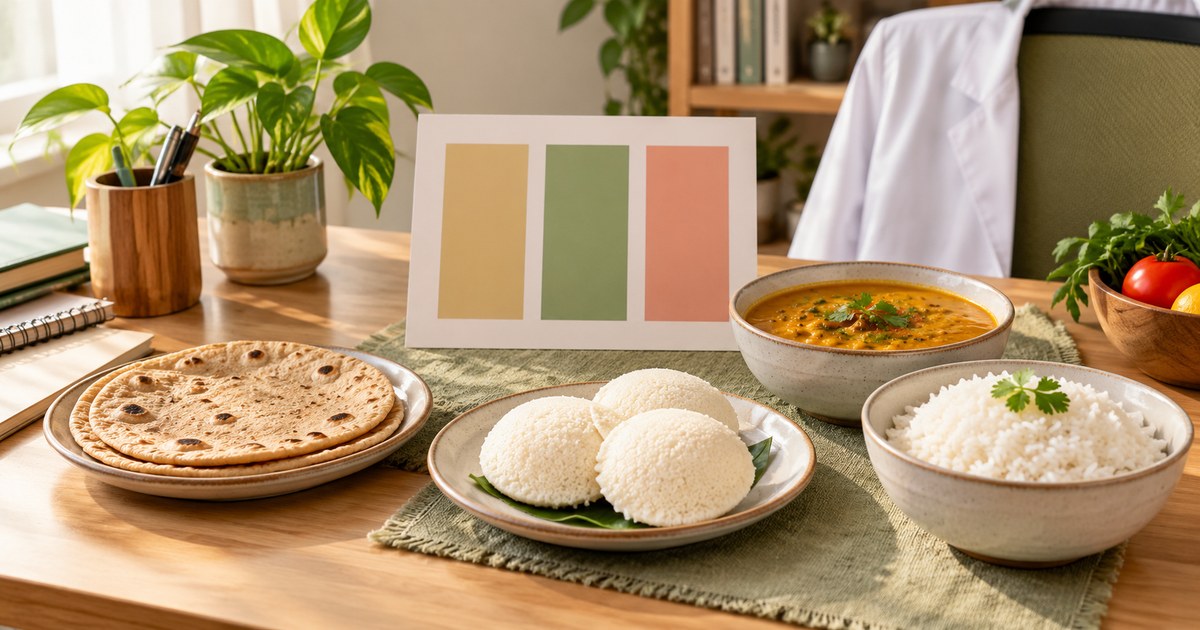
A glycemic index of Indian foods chart should preserve the tested recipe. An idli made with sorghum cannot supply the GI of every rice idli, and maize roti is not wheat chapati. Use the chart to find the relevant evidence and its limits before discussing a client’s meal.
Read a primary-study result with its preparation
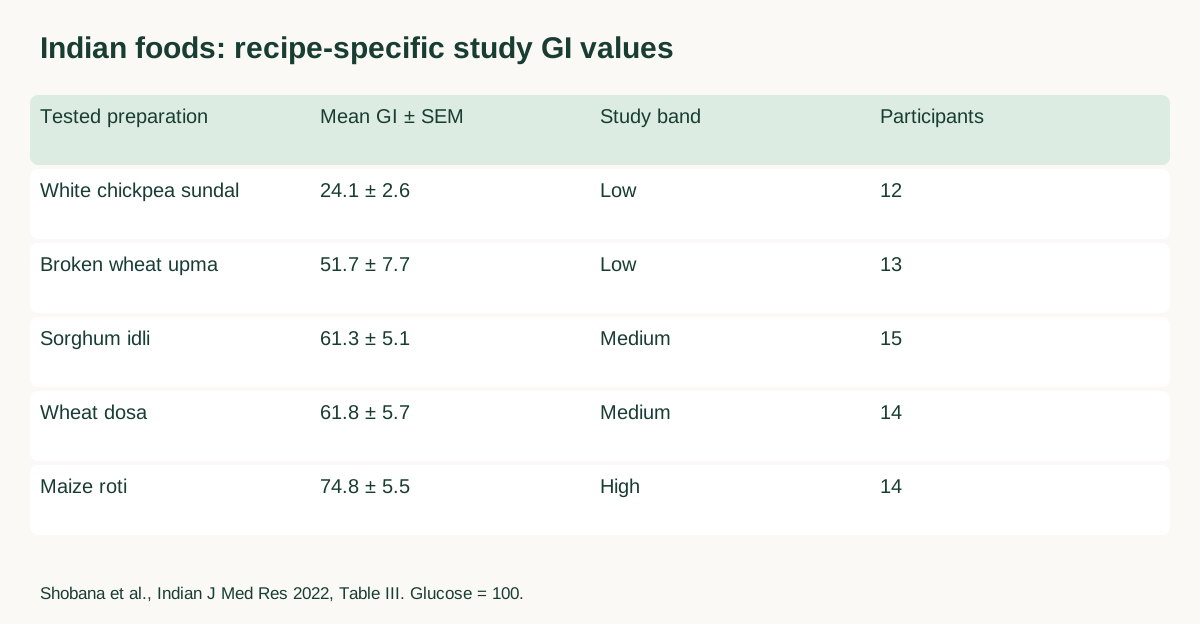
| Tested preparation | Mean GI ± SEM | Study band | Participants |
|---|---|---|---|
| White chickpea sundal | 24.1 ± 2.6 | Low | 12 |
| Broken wheat upma | 51.7 ± 7.7 | Low | 13 |
| Sorghum idli | 61.3 ± 5.1 | Medium | 15 |
| Wheat dosa | 61.8 ± 5.7 | Medium | 14 |
| Maize roti | 74.8 ± 5.5 | High | 14 |
Source: Shobana and colleagues, Carbohydrate profiling and glycaemic indices of selected traditional Indian foods, Table III. These are five selected results from that study. SEM means standard error of the mean. Foods were tested in portions supplying 50 g available carbohydrate against glucose; the reported values describe those preparations and participants.
The University of Sydney’s GI explanation uses low, medium and high bands. A band does not remove the uncertainty around a measured result or establish the response to a mixed meal.
GI and glycemic load answer different questions
GI describes a relative response for a fixed available-carbohydrate amount. Glycemic load also includes the available carbohydrate in the eaten portion: GI × available carbohydrate in that portion ÷ 100. Keep the food preparation and carbohydrate definition matched before calculating it. Do not combine a study’s sorghum-idli GI with an unrelated rice-idli database row and present the result as a measured GL.
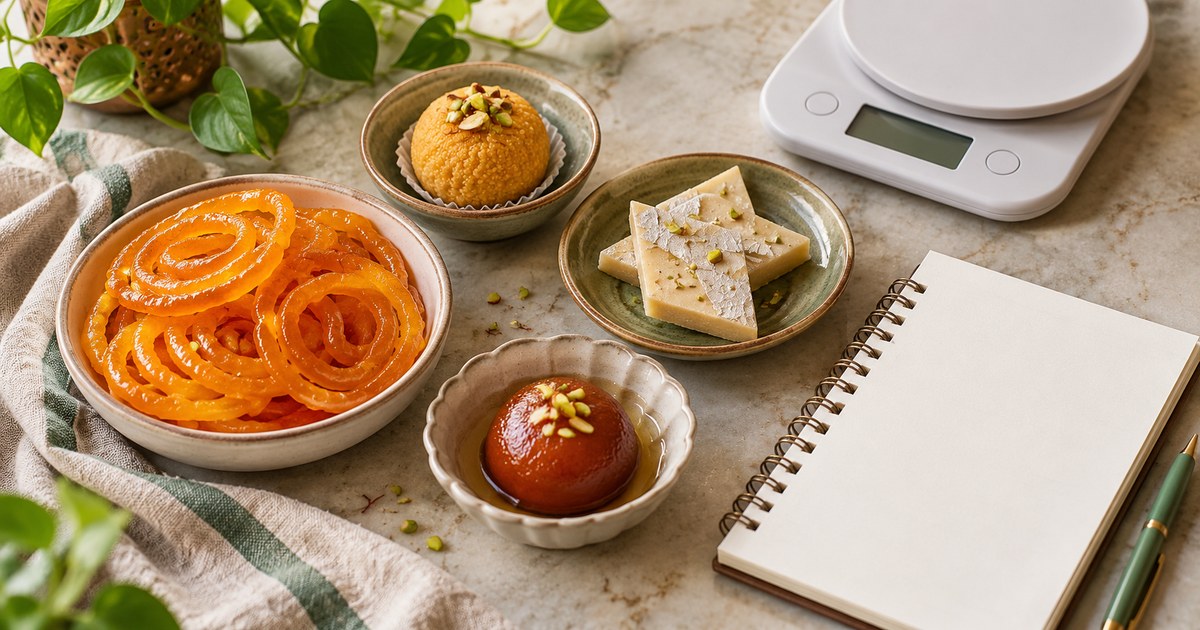
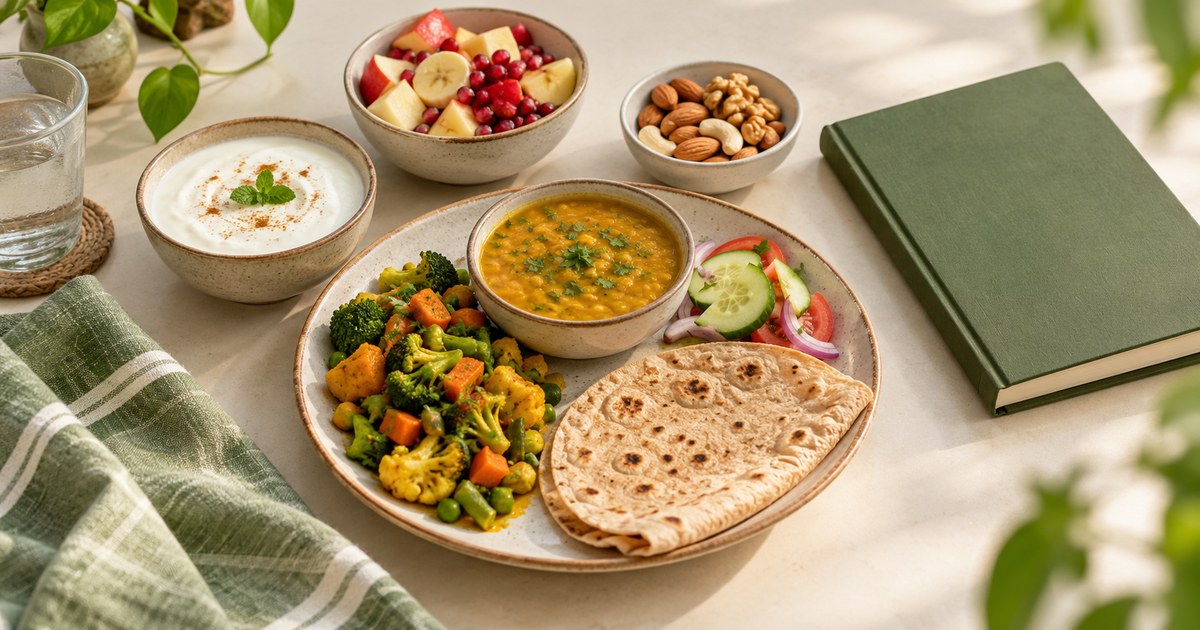
For an ordinary food diary, first establish what the client ate and how much. The roti, idli, dates, jalebi and pomegranate pages are portion references. Their calorie or carbohydrate values do not establish a GI; this article does not assign unmeasured values to them.
A short review sequence for the practice
- Record the actual preparation, portion and accompanying foods.
- Locate a primary measurement for a sufficiently matching recipe.
- Record the reference food, study population and uncertainty alongside the GI.
- Explain where the database portion and study portion differ.
- Keep glucose-monitoring interpretation and treatment decisions with the clinical team.
Use the Indian-food carbohydrate-counting workflow when the immediate question is grams of carbohydrate. Use the exchange worksheet when the task is teaching a consistent portion language. A GI chart cannot replace either assessment.
Bring the reference into a client diary
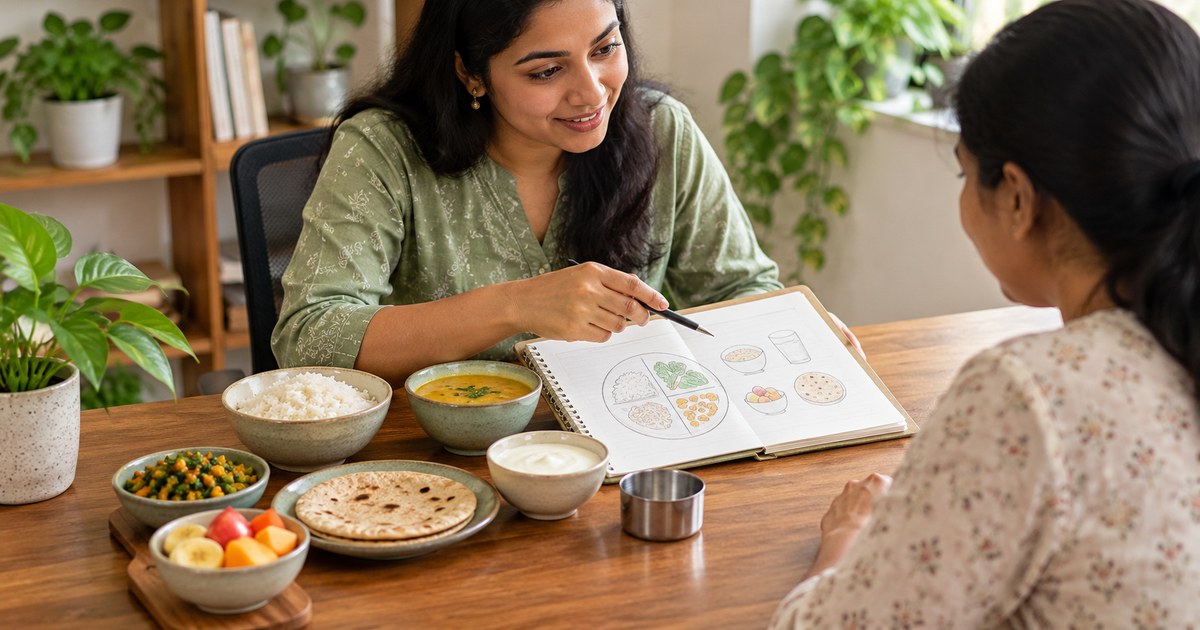
Use the Indian food database guide for dietitians to understand the record behind an estimate. When the practical task is a plan, try the diet chart maker. For shared diary review, see how a practice gets started. Keep your clinical assessment and the client’s own account alongside any database match.
Quick answers
Asked and answered
Is a millet preparation automatically low GI?
No. The cited study contains millet preparations in different GI bands. Retain the exact preparation rather than assigning a band to an entire grain category.
Does low GI mean a food can be eaten without considering portion?
No. Establish the eaten portion and the overall care plan; the GI result alone is not a portion recommendation.