Westerners think eating with hands is unhygienic. Indians have been doing it for thousands of years.
What your fingers actually do
Your fingertips have nerve endings that sense temperature, texture, and portion size. When you touch food before it enters your mouth, your brain gets a preview. It's a small sensory preview before the first bite even reaches your mouth.
With a spoon or fork, you skip this preview entirely.
Wash first
Wash your hands thoroughly with soap before eating. Clean hands are the whole point of the tradition.
You eat slower with hands
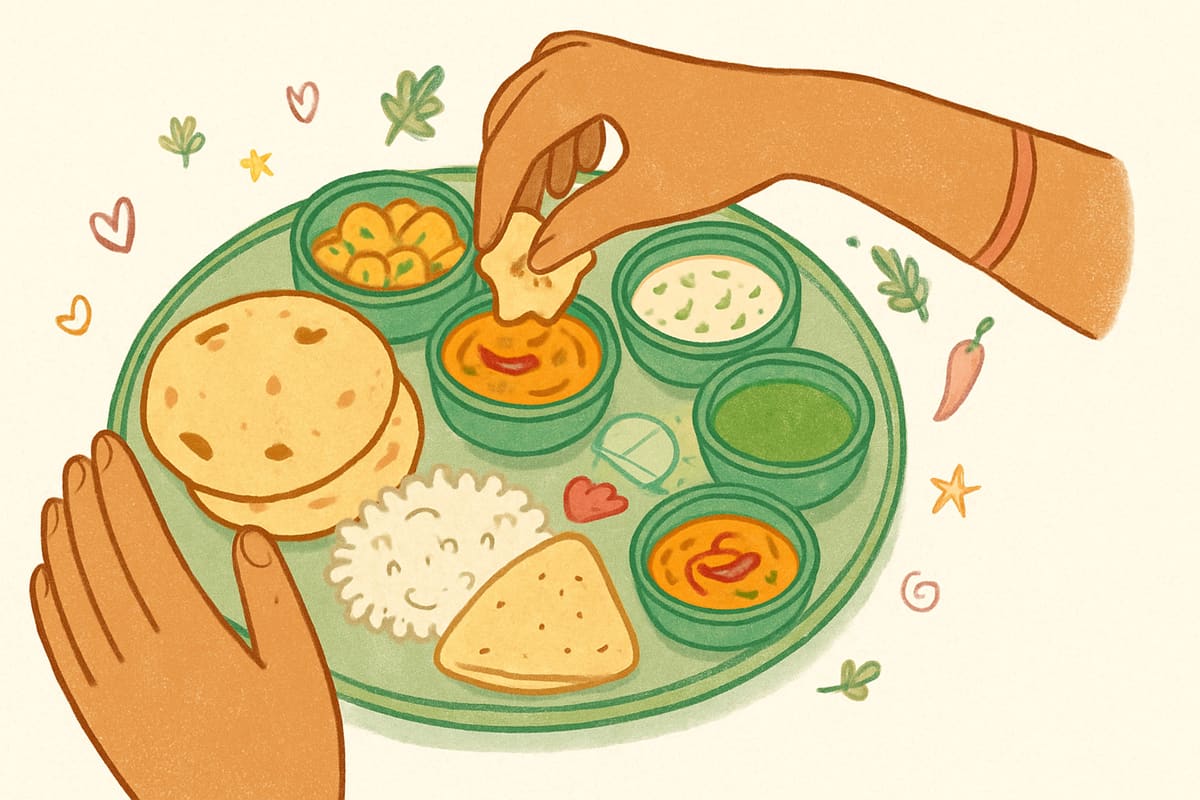
Try speed-eating dal chawal with your hands. It's nearly impossible. The physical act of mixing, tearing roti, and bringing food to your mouth with your fingers naturally slows you down.
Slower eating means more chewing and more time to notice when you're full. Your hands are a natural portion controller.
The temperature check
When you touch hot sambar or dal, you know immediately if it's too hot. With a spoon, you might burn your mouth because you only feel the temperature when it's already inside.
Not every food needs hands
Obviously, you're not eating soup with your hands. Use common sense. But for Indian meals — roti, rice, dal, sabji — hands feel natural and work well. Your dadi was right again.
Quick answers
Asked and answered
Is eating with hands unhygienic?
Not if you wash your hands properly before eating. The hands-are-dirty argument applies to unwashed hands. Soap and water first, every time.
Do other cultures eat with hands?
Yes. Most of South Asia, the Middle East, parts of Africa, and Southeast Asia traditionally eat with hands. Over half the world's population eats with hands. It's not "primitive" — it's the norm.
Should I teach my kids to eat with hands?
Yes. The sensory connection with food, slower eating habits, and awareness of portions are all habits that start in childhood.