You Don't Need Protein Powder
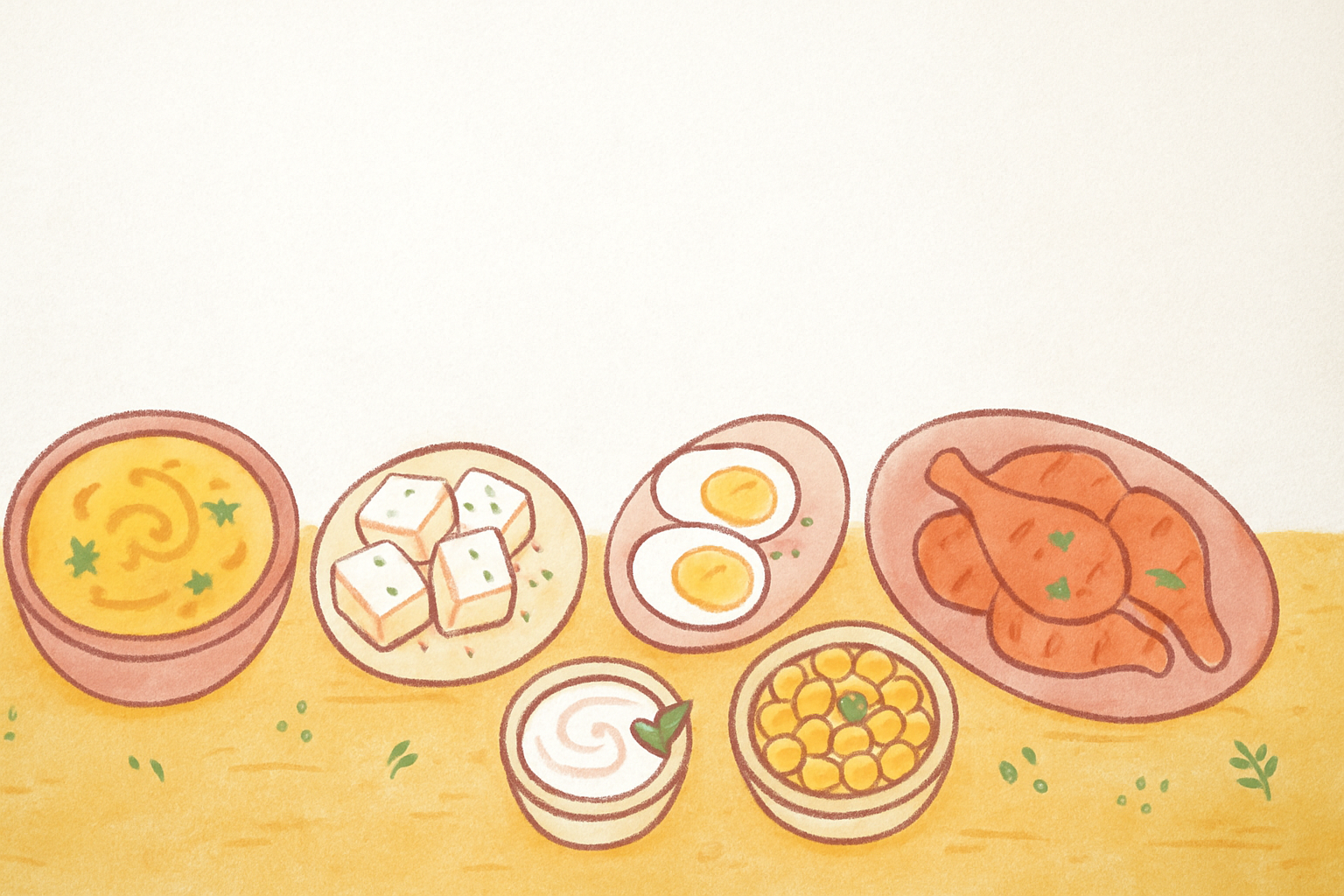
The supplement industry has convinced South Asians that you can't build muscle without whey protein. That's not true. Every traditional desi kitchen already has high-protein foods — dal, eggs, paneer, curd, chicken, fish, chana. The problem isn't access. It's awareness.
Most South Asians eat 40-50g protein daily when they need 70-100g. The gap isn't because desi food lacks protein — it's because meals are carb-heavy (rice, roti, paratha) with protein as a side dish instead of the center.
The Complete Desi Protein Chart
Non-Vegetarian
| Food | Portion | Protein | Calories |
|---|---|---|---|
| Chicken breast (grilled) | 100g | 25g | 165 cal |
| Chicken korma | 1 bowl (200g) | 22g | 350 cal |
| Egg (boiled) | 1 | 6g | 70 cal |
| Egg bhurji (2 eggs) | 1 portion | 13g | 200 cal |
| Fish (rohu/tilapia) | 1 piece (100g) | 20g | 95 cal |
| Hilsa (ilish) | 1 piece (80g) | 15g | 165 cal |
| Mutton seekh kebab | 2 pieces | 18g | 200 cal |
| Chicken tikka | 4 pieces (100g) | 22g | 180 cal |
| Keema (mutton mince) | 1 bowl (150g) | 20g | 250 cal |
| Chicken kebab | 2 pieces | 16g | 160 cal |
Vegetarian
| Food | Portion | Protein | Calories |
|---|---|---|---|
| Paneer | 100g | 18g | 260 cal |
| Curd/dahi (plain) | 1 cup (200g) | 8g | 120 cal |
| Masoor dal (cooked) | 1 bowl (200g) | 8g | 120 cal |
| Moong dal (cooked) | 1 bowl (200g) | 7g | 110 cal |
| Chana/chole (cooked) | 1 bowl (200g) | 9g | 170 cal |
| Rajma (cooked) | 1 bowl (200g) | 9g | 170 cal |
| Soy chunks (cooked) | 50g dry | 25g | 170 cal |
| Peanuts (roasted) | 30g handful | 8g | 170 cal |
| Milk (full fat) | 1 glass (250ml) | 8g | 150 cal |
| Greek-style yogurt | 1 cup | 12g | 130 cal |
| Sprouted moong | 1 cup | 7g | 60 cal |
| Tofu | 100g | 8g | 75 cal |
Protein per Rupee (Best Value)
| Food | Protein per ~₹50 |
|---|---|
| Eggs (6) | 36g |
| Soy chunks (100g) | 50g |
| Moong dal (100g dry) | 24g |
| Chana (100g dry) | 20g |
| Milk (500ml) | 16g |
| Peanuts (100g) | 26g |
| Chicken (100g) | 25g |
| Paneer (100g) | 18g |
Soy chunks and eggs are the cheapest protein in South Asia.
How to Hit 100g Protein — Sample Day
Non-Vegetarian (~105g protein, ~1,600 cal)
| Meal | Food | Protein |
|---|---|---|
| Breakfast | 2 boiled eggs + 1 roti + chai | 16g |
| Lunch | 1 bowl dal + chicken curry (150g) + 1 roti | 30g |
| Snack | 1 glass dahi + handful peanuts | 16g |
| Dinner | Fish curry + 1 cup rice + salad | 24g |
| Night | 1 glass milk | 8g |
| Total | ~94g |
Vegetarian (~85g protein, ~1,500 cal)
| Meal | Food | Protein |
|---|---|---|
| Breakfast | Paneer bhurji (80g paneer) + 1 paratha | 19g |
| Lunch | Rajma (1 bowl) + 1 cup rice + raita | 19g |
| Snack | Roasted chana (50g) + sprouted moong (1 cup) | 17g |
| Dinner | Dal (1 bowl) + 1 roti + soy chunk curry (30g dry) | 23g |
| Night | 1 glass milk | 8g |
| Total | ~86g |
The 3 Rules
1. Protein at every meal
Don't save all protein for dinner. Split it: 20-25g at each meal + snacks. Your body can only absorb ~30-40g at a time anyway.
2. Double the dal
Most households serve dal as a thin, watery side. Make it thick, serve a full bowl (200g cooked), and that's 8g protein right there. Two bowls a day = 16g from dal alone.
3. Dahi/curd daily
It's cheap, available everywhere, and adds 8g protein per cup. Have it as raita with lunch, plain with dinner, or as a lassi.
FAQ
Do I need protein powder if I eat desi food?
No. If you eat eggs, dal, paneer/chicken, curd, and legumes daily, you can hit 80-120g without supplements. Protein powder is a convenience, not a necessity.
How much protein do I need?
1g per kg of body weight for general health. 1.5-2g per kg if you're actively building muscle. A 70kg person needs 70-140g depending on goals.
What if I'm vegetarian?
Combine dal + paneer + curd + soy chunks + legumes. It's harder but very doable. The sample vegetarian day above hits 86g without any meat or eggs.
Is too much protein bad for kidneys?
For healthy individuals, no. Studies show up to 2g/kg is safe. If you have existing kidney disease, consult your doctor. For most people, the bigger risk is too little protein, not too much.
Track your protein intake — type any desi meal into Shellel's calorie checker and see exact protein counts.