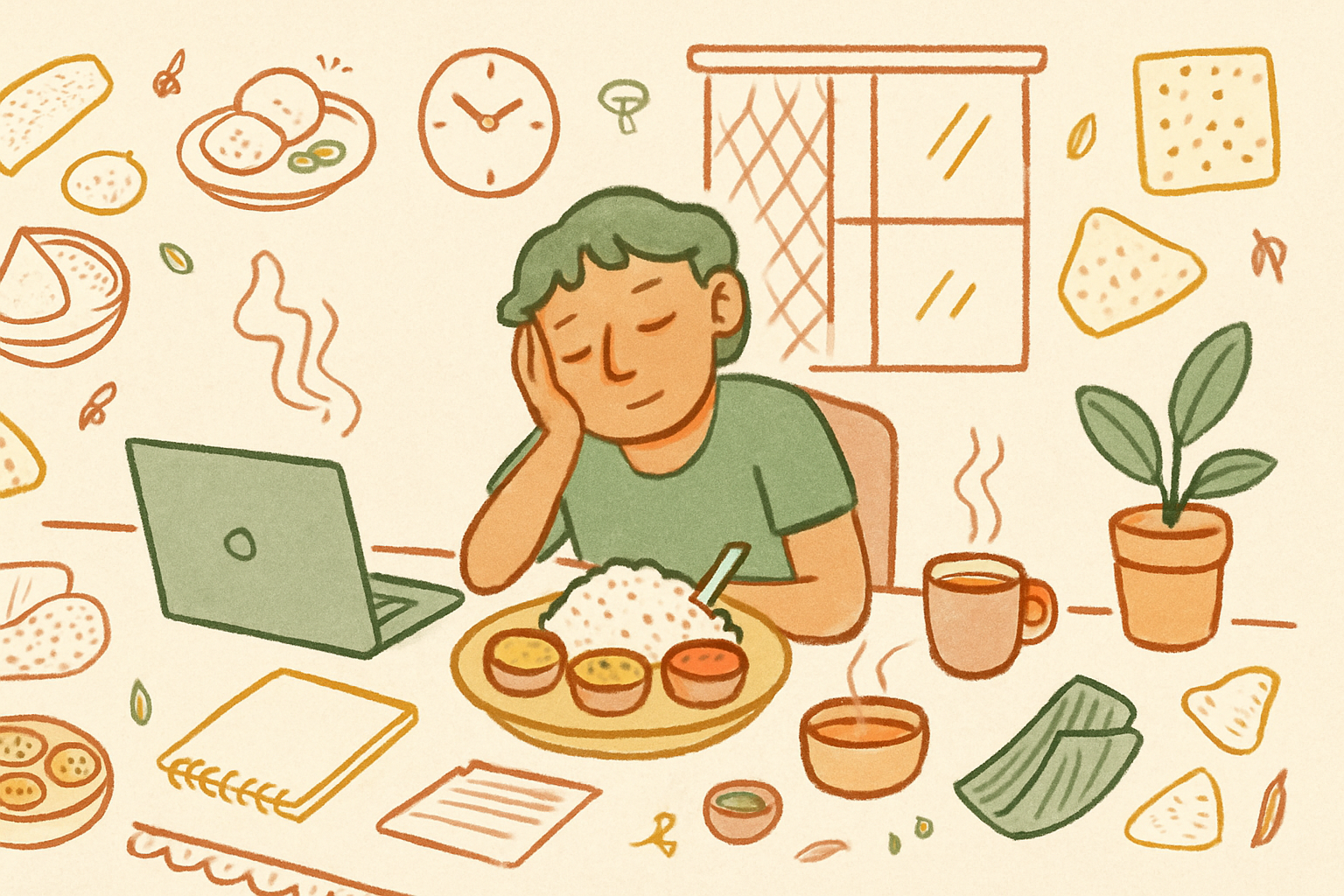
1 PM. Dal chawal done. 1:30 PM. Eyelids heavy. 2 PM. You're fighting to stay awake in a meeting. Happens every single day. Why?
It's not the rice. It's the insulin spike.
White rice has a high glycemic index (GI of 73). It dumps glucose into your blood fast. Your body releases a big wave of insulin to handle it. That insulin surge triggers tryptophan to cross into your brain, where it converts to serotonin and then melatonin — the sleep hormone.
More rice = bigger spike = more melatonin = more sleepy.
Why roti doesn't hit as hard
Whole wheat roti has a GI of about 55. Slower glucose release, gentler insulin response, less tryptophan flooding your brain. You still digest carbs, but the curve is smoother.
That's why people who switch from rice-heavy lunches to roti-based lunches often report less afternoon drowsiness. It's not the quantity — it's the speed of sugar absorption.
3 ways to eat rice without the crash
1. Eat less rice, more dal and sabji. Instead of a plate of rice with dal on the side, flip it. Big bowl of dal, smaller portion of rice. The protein and fiber slow down glucose absorption.
2. Eat sabji and dal first, rice last. The fiber from vegetables and protein from dal create a buffer in your stomach. When rice hits, the sugar absorbs slowly instead of spiking. This trick alone can reduce post-meal blood sugar by 30%.
3. Try brown rice or millets. Brown rice (GI 50) and bajra/jowar rotis are lower glycemic. Same satisfaction, less crash. Mix half white rice with half brown rice if you can't fully switch.
The portion sweet spot
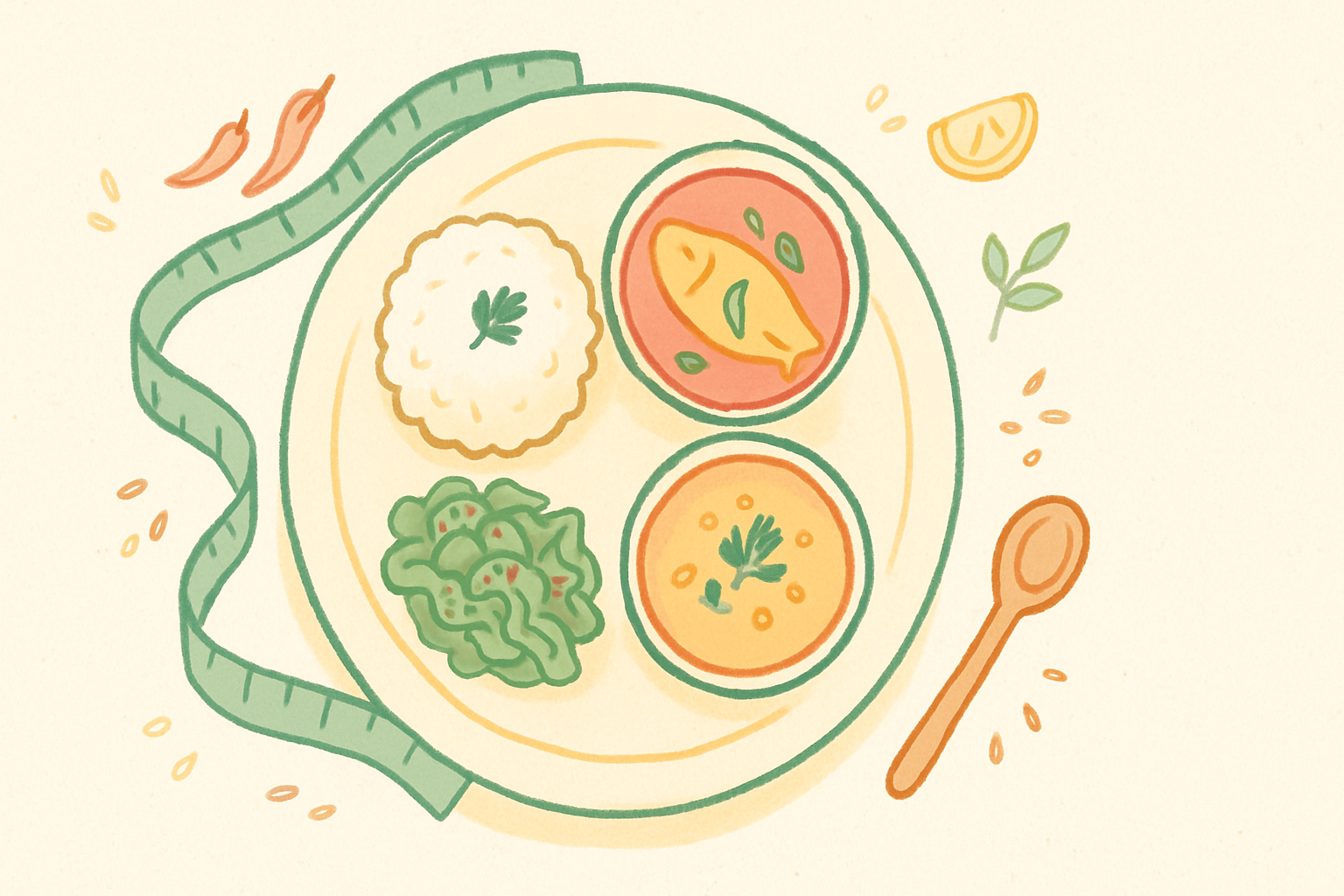
About 100-150g cooked rice (one small katori) paired with a big serving of dal and sabji is the sweet spot for most people. Enough to enjoy, not enough to knock you out.
Track what you eat for a week with Shellel and you'll see exactly how much rice you're actually eating. Most people underestimate by 50%.
Frequently Asked Questions
Is brown rice less sleepy than white rice?
Yes. Lower glycemic index means a slower, gentler insulin response. Less serotonin conversion, less drowsiness.
Does biryani make you sleepier than plain rice?
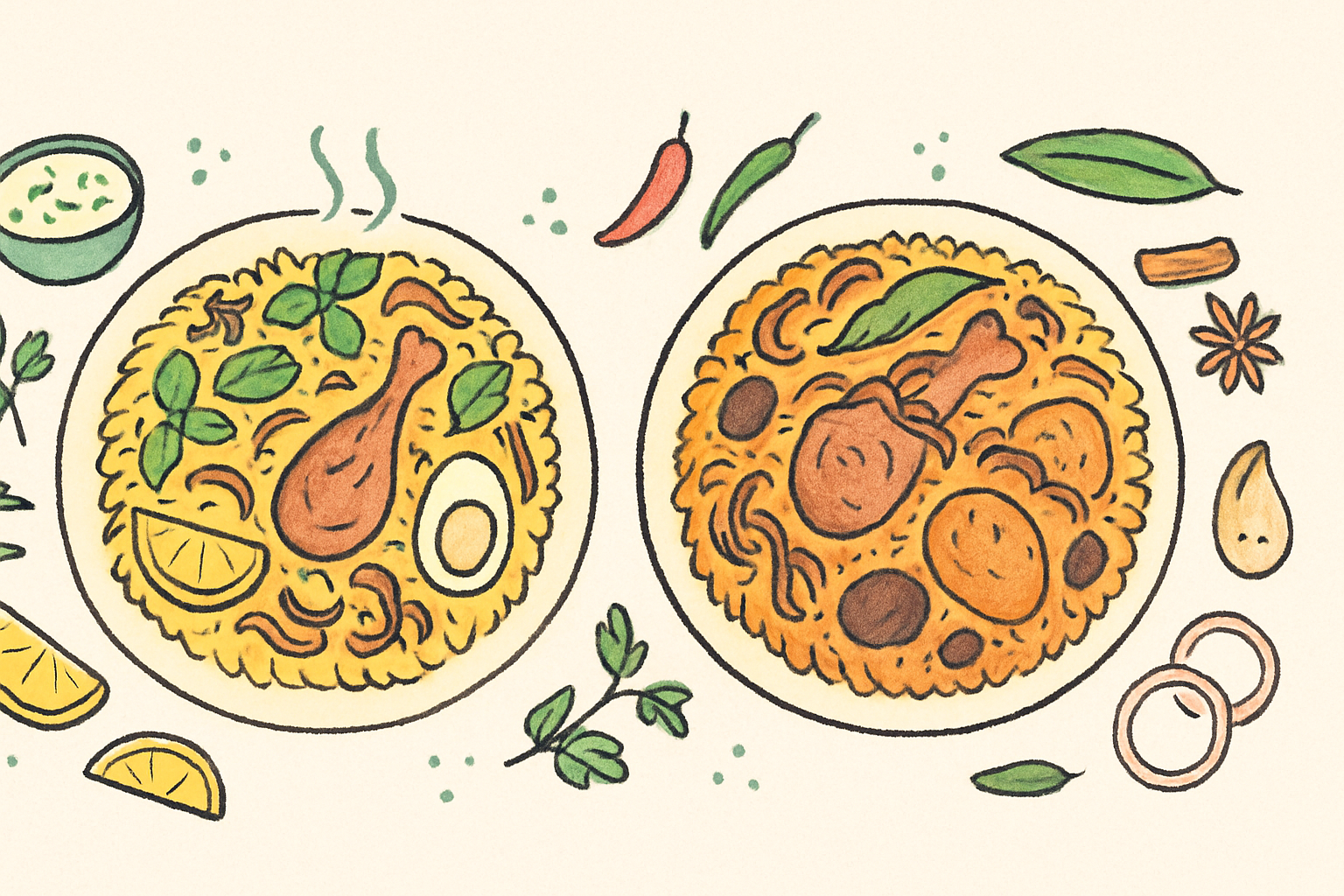
Biryani has more fat and protein from the meat, which actually slows sugar absorption slightly. But it's also usually a bigger portion. Net effect: about the same drowsiness, sometimes more because you eat more.
Why don't South Indians feel sleepy? They eat rice three times a day.
They often do — but their portions tend to be smaller per meal, and sambar, rasam, and curd balance the glycemic load. Also, adaptation plays a role — lifelong rice eaters' bodies handle it differently.