
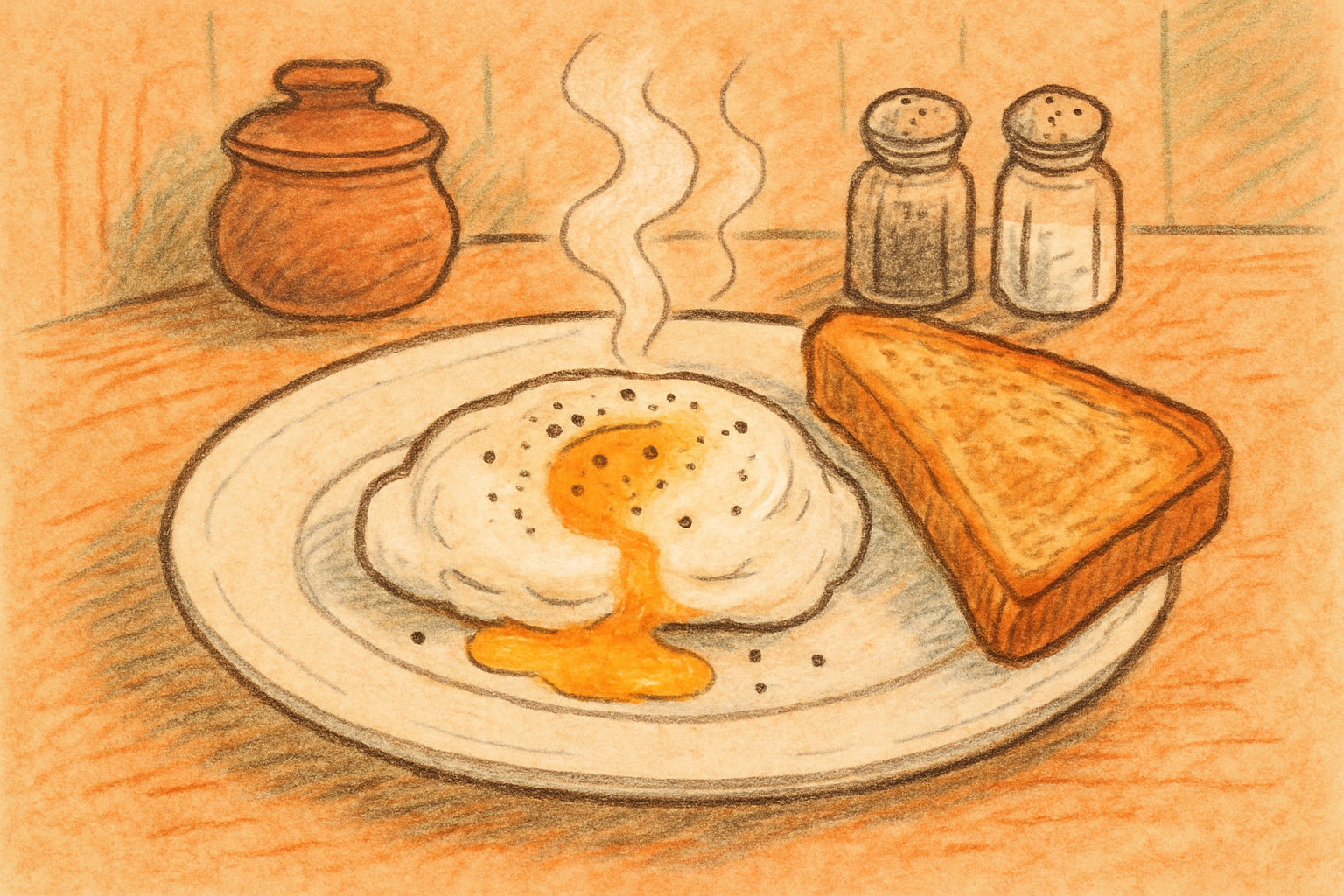
Poached egg
Also called: poached egg, poached anda, poached egg (anda), pochd egg, poach egg, poch egg
Poached egg is that soft, silky anda that feels simple but fancy at the same time. You’ll see it on breakfast plates, toast, salads, or even in a quick office lunch when someone wants something light yet filling. The yolk stays runny and the whites are gently set, so every bite feels clean and comforting.
Per 1 egg (50g)
Nutrition Facts
| Nutrient | Per egg (50g) | Per 100g |
|---|---|---|
| Calories | 62 kcal | 123.9 kcal |
| Protein | 6g | 12g |
| Carbohydrates | 0.2g | 0.4g |
| Fat | 4.1g | 8.2g |
| Fiber | 0.2g | 0.3g |
| Sugar | 0g | 0g |
| Micronutrients (per 100g) | ||
| Sodium | 1163.07 mg | |
| Calcium | 48.24 mg | |
| Iron | 1.75 mg | |
| Vitamin C | 0 mg | |
| Folate | 24.77 µg | |
What Goes Into It
Per serving (1 egg)
gastroenterology Gut Health Insight
Poached egg is easy on the tummy because it is cooked without oil, so there’s no heavy frying factor. The egg gives high-quality protein, which digests well and keeps you full, while the black pepper can help wake up digestion a bit. Since this dish has almost no fiber, it works best when you pair it with toast, sautéed veggies, or oats for better gut movement. The vinegar used in poaching is usually small, but it can help the egg white set nicely without adding extra fat.
From the Shellel Blog
Want to track Poached egg in your daily meals?
Just say "Poached egg" in Shellel and get instant macros.
download Get Shellel FreeNutrition data sourced from ICMR-NIN Indian Food Composition Tables (IFCT) and the Indian Nutrient Database (INDB 2024). Values are per standard serving and may vary with preparation method.