Indian Nutrition Rating: How to Read the Star Labels
Here’s the thing. You grab chips at the kirana, flip the pack, and boom — tiny numbers everywhere. Now add a big star logo on the front. Helpful? Or just more confusion?
Real talk. The Indian Nutrition Rating (INR) is India’s attempt to make that choice easier. Stars on the front. Facts on the back. Let’s make sense of it — fast.
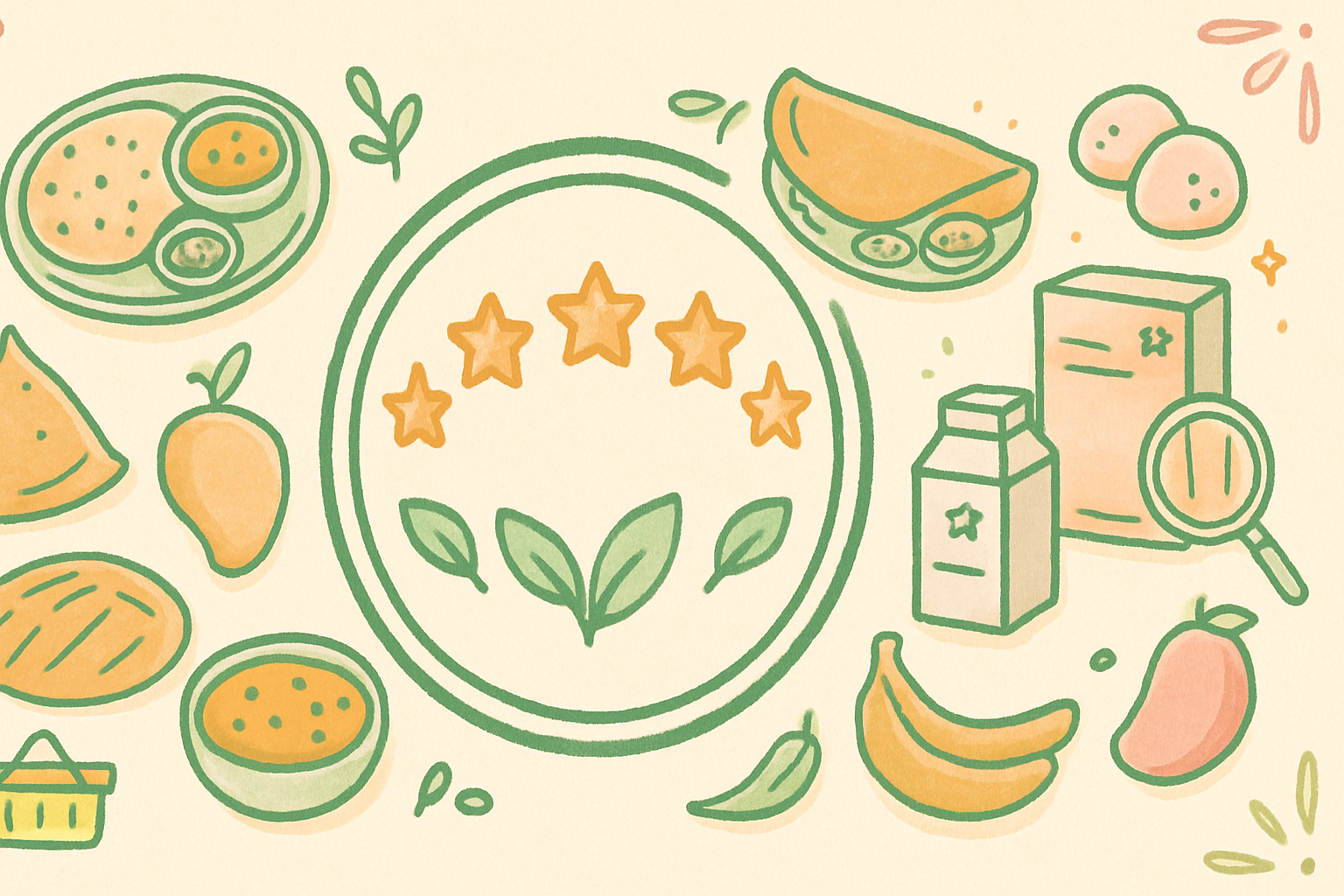
What is the Indian Nutrition Rating (INR) star label? Think of INR as a traffic signal on the front of the pack. It gives packaged foods a quick 0.5 to 5 star score. More stars = generally better overall nutrition per 100 g/ml. It looks simple because it hides the maths inside. (fssai.gov.in)
So… is INR actually live in 2026? You know what’s funny? It’s still in progress. As of March 30, 2026, the Supreme Court has been pushing for strong front-of-pack labelling, and FSSAI’s model (which includes the star concept) is under active review. Translation: you may see pilots, but a single mandatory system isn’t fully rolled out yet. Watch this space — the court asked FSSAI for updates in an order dated February 10, 2026. (business-standard.com)
Wait, didn’t FSSAI already change labels? Yes. Separate from stars, FSSAI told brands to show salt, sugar and fat more clearly — larger, bolder font on the front. So even before stars become universal, you’ll start noticing bolder numbers on shelves. Good move, honestly. (fssai.gov.in)
How does INR calculate those stars? Here’s the vibe. The algorithm gives “baseline” negative points for the stuff we overdo — energy (calories), total sugar, saturated fat, sodium. Then it subtracts positive points if the food has decent amounts of fruit/veg, nuts/legumes/millets, fibre, and sometimes protein. Final score converts to stars. More positives, fewer negatives, more stars. Simple to read, heavy maths inside. (fssai.gov.in)
What pushes stars down vs up? Let me break this down:
Cheat sheet: what hurts vs helps the score (per 100 g/ml)
- Pulls stars down: higher energy (kcal), total sugar, saturated fat, sodium.
- Pulls stars up: real fruit and veg, nuts/legumes/millets, dietary fibre, and protein (protein helps more once the baseline “junk points” aren’t too high).
The exact thresholds and caps are defined by FSSAI’s draft notification — the one that lays out the formula, categories (solids vs liquids), exemptions, and even logo size on the pack. (fssai.gov.in)
Are all foods covered? Mostly packaged foods. Fresh basics like plain milk or raw veggies don’t need stars. Some categories are exempted, and liquids are scored a bit differently from solids. So a tetra-pack drink and a biscuit pack won’t be treated the same way. Fair enough. (fssai.gov.in)
Star labels vs warning labels — which works better? Let’s be honest. There’s a whole fight here. Some experts want big, blunt warning labels for “High in Sugar/Salt/Fat.” Others are okay with a star rating that rolls everything into one number. Indian public-health folks have published statements supporting warning labels for clarity. At the same time, consumer studies in India have tested multiple label styles — traffic lights, Nutri-Score, warnings, stars — to see what people actually understand. Bottom line: labels must be easy to read, fast. Stars are simple; warnings are blunt. We might end up with a combo. (journals.lww.com)
So, how do YOU use stars smartly when you see them? Here’s the play. You’re choosing between two similar snacks — pick the one with higher stars. If stars seem close, flip the pack and check sugar and sodium first. If it’s a drink, watch sugar per 100 ml — tiny serving sizes are sneaky.
Got an example I’ll actually remember? Picture two biscuits. One’s loaded with sugar and sodium, barely any fibre — low stars. The other adds millets/nuts, ups fibre, keeps sugar lower — better stars. Same category, different outcomes. That mental model is enough to win your grocery run.
What about our desi staples — do stars apply? Your everyday idli, masala dosa, poha, pav bhaji, chapati/roti, dal makhani, sambar, and even weekend mutton biryani — these are usually home-cooked or from restaurants, so no stars on your thali. Stars are for packaged stuff. But if you buy ready-to-eat rajma or a packet mix, then yes — the star system would apply. For home meals, focus on portion size, oil, sugar, and salt. If weight loss is the goal, this guide will help you structure the day around Indian food. https://shellel.com/blog/indian-diet-plan-weight-loss
How to sanity-check a “healthy-looking” 4–5 star pack
- If it’s sweet, check total sugar per 100 ml (drinks) or 100 g (solids). If it’s over the top, stars won’t save you on blood sugar spikes.
- If you snack daily, sodium adds up. Compare similar products. Lesser sodium wins your BP.
- Fibre is your friend. A couple extra grams per 100 g can tilt the stars and your satiety.
How do kids and busy adults benefit? Short answer: faster decisions. You’re in the office canteen shop between calls. Two cereal boxes. Grab the higher star. Done. Later, when life’s not mad, read the back-of-pack.
Let me break the algorithm (without the headache)
- INR calculates “baseline points” from calories, sugar, sat fat, sodium.
- Then it subtracts “positive points” from fruit/veg, nuts/legumes/millets, fibre, and sometimes protein, to get the final score.
- That final score maps to 0.5 to 5 stars. The draft even specifies logo size and where it should sit on the front. Clean implementation, once finalized. (fssai.gov.in)
Will the star label stop junk cravings? Arre, stars aren’t magic. But they’re a nudge. If you use them like a filter — higher star beats lower star, within a category — you’ll reduce sugar, sodium, and empty calories across the week without thinking too much. Mumbai locals, imagine it like choosing an autorickshaw with the working meter — less drama later.
What about chai, mixes, and flavoured drinks? Your plain garam chai at home? No stars. But a bottled iced tea or sweetened beverage powder would get scored. If you’re into flavoured milkshakes or coffee mixes, pay attention to sugar per 100 ml — serving tricks are common. If added sugar hits the roof, stars will drop accordingly. (fssai.gov.in)
How does this tie back to real Indian goals like weight, PCOS, diabetes? Stars quietly push you toward lower sugar and better fibre — that helps weight management and blood sugar control. If you’re balancing your daily meals — say, chapati/roti + kidney bean curry (rajma) for protein-fibre — a better star choice on packaged snacks and drinks stops the damage at the edges.
What’s the catch? Any single number can hide nuance. A cereal could earn stars via fibre but still be sugary. A savoury snack might look okay on calories but pack sodium. That’s why you use stars for speed, then flip the pack for sugar and sodium when in doubt. Also, policy is evolving — India may strengthen warnings or tweak the star model before full rollout. Stay tuned. (journals.lww.com)
Practical stuff you can do today
- When two similar products sit on the shelf, choose the higher star — easy win.
- If stars aren’t there yet, use the bold numbers FSSAI asked for: sugar, salt, fat, front and centre.
- Keep a mental cap: sweet drinks are sneaky. If it’s more than ~10–12 g sugar per 100 ml, it’s basically dessert.
- Build your day around real meals. A breakfast like idli + sambar, a lunch with chapati/roti and dal makhani, and keep “treats” actually occasional. Shellel will do the math for you.
Frequently Asked Questions
Is Indian Nutrition Rating mandatory right now?
As of March 30, 2026, no single mandatory star system is on every packet. The Supreme Court has pressed for strong front-of-pack labelling, and FSSAI’s model is under review. Expect changes soon. (business-standard.com)
How many stars should I aim for when shopping?
Within the same category, higher stars are better. If one muesli is 4 and another is 2.5, pick the 4. Then check sugar and sodium just to be safe.
Do stars apply to restaurant food or home-cooked meals?
Nope. INR is for packaged foods. For home meals like poha, masala dosa, or butter chicken, portion control and ingredients matter more. Use Shellel to log “2 roti + dal + salad” and get instant macros.
Are 5-star foods automatically “healthy” for me?
Stars compare products nutritionally, not medically. If you’re diabetic or have hypertension, sugar and sodium targets still rule your choices. Flip the pack when it’s about your health condition.
Why do some people argue for warning labels instead of stars?
Because warnings are blunt and hard to ignore. Indian public-health experts have supported strong warnings for high sugar/salt/fat. Stars are simpler for quick comparison. India may blend approaches. (journals.lww.com)
Wrap up You don’t need a nutrition degree to shop better. Use stars for speed. Use the back-of-pack for the fine print. And keep your plate desi and balanced. Oh, and if you’re tired of guessing calories in mom’s rajma chawal — Shellel gets it. Just type what you ate and we handle the math: https://shellel.com
External references you can skim later:
- FSSAI draft notification explaining the INR formula, categories, and logo rules. (fssai.gov.in)
- India-focused consumer research comparing label formats on the FSSAI site. (fssai.gov.in)
— Not medical advice — talk to your doctor for anything specific to you. Nutrition data from ICMR-NIN tables.
Citations used in this guide:
- INR star scale, formula basics, categories, exemptions, and logo placement come from FSSAI’s draft notification on Front-of-Pack Nutrition Labelling (Indian Nutrition Rating). (fssai.gov.in)
- Supreme Court status and Feb 10, 2026 order seeking FSSAI’s response on FoP labelling. (business-standard.com)
- FSSAI move to make sugar, salt, and fat readouts bolder on the front. (fssai.gov.in)
- Expert consensus in India supporting strong warning labels on high sugar/salt/fat products. (journals.lww.com)
- India-specific consumer testing of label formats (IIMA study hosted by FSSAI). (fssai.gov.in)
Author: Ashutosh Swaraj