
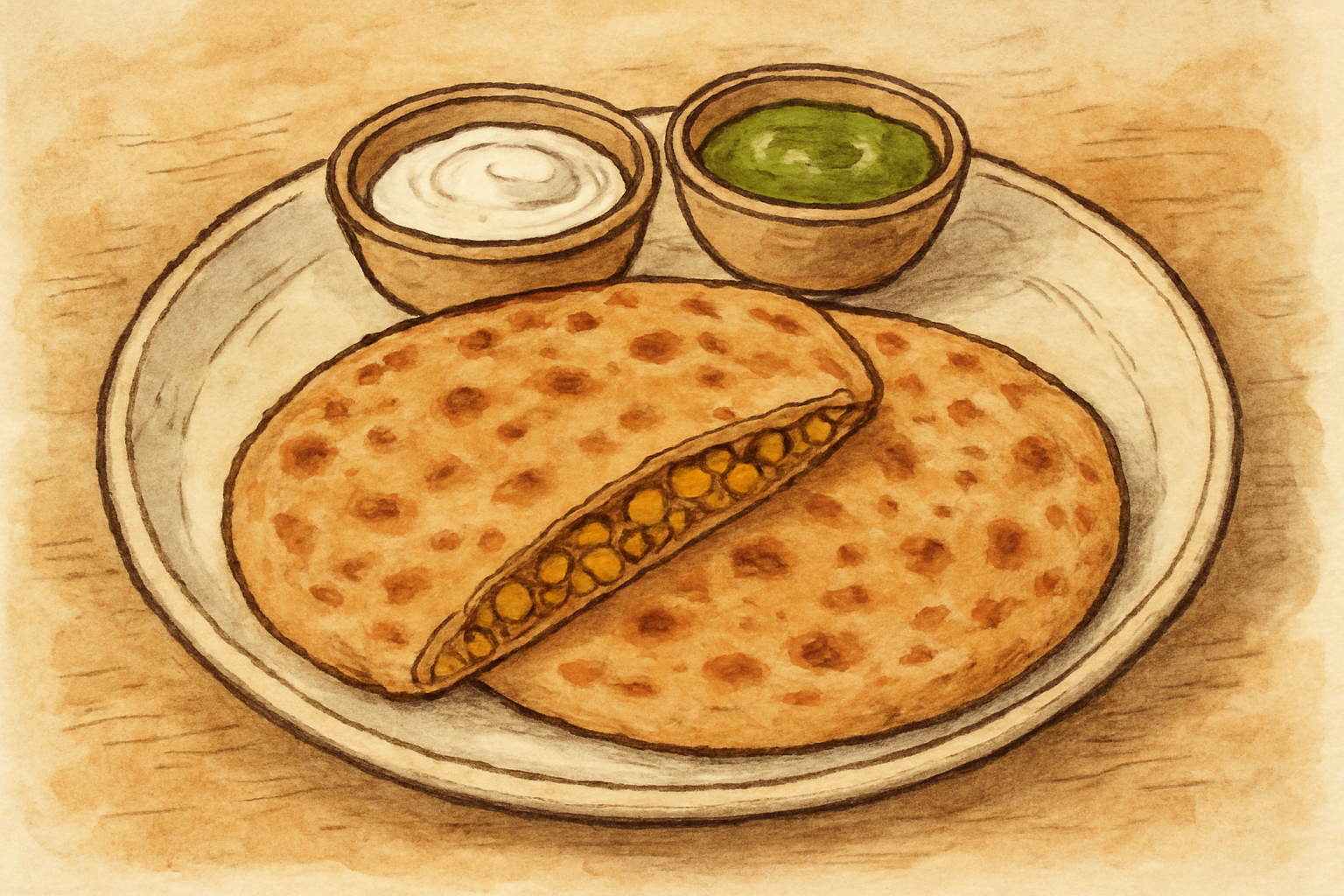
Dal parantha/paratha
Also called: dal paratha, dal parantha, dal ka paratha, daal paratha, dal-stuffed paratha, dal paranthaa, dal parotha, dal parotha, dal paranthaa
Dal paratha is that proper comfort-food breakfast or tiffin from an Indian kitchen — soft on the outside, spicy dal filling inside, and usually best with curd, achar, or a blob of butter. It feels like something mom packs when she wants the meal to be filling and ghar-ka-swaad wali.
Per 1 parantha (100g)
Nutrition Facts
| Nutrient | Per parantha (100g) | Per 100g |
|---|---|---|
| Calories | 268.2 kcal | 268.2 kcal |
| Protein | 6.8g | 6.8g |
| Carbohydrates | 30g | 30g |
| Fat | 13.1g | 13.1g |
| Fiber | 6.5g | 6.5g |
| Sugar | 1.4g | 1.4g |
| Micronutrients (per 100g) | ||
| Sodium | 156.13 mg | |
| Calcium | 23.89 mg | |
| Iron | 2.45 mg | |
| Vitamin C | 1.8 mg | |
| Folate | 29.02 µg | |
What Goes Into It
Per serving (1 parantha)
gastroenterology Gut Health Insight
Dal paratha brings a nice mix of fibre from whole wheat and channa dal, so it can support smoother digestion and keep you full for longer. The onion, green chilli, coriander, and amchur add flavour and may help stimulate digestion a bit, while the dal adds some plant protein too. Since it has a decent amount of fat from the stuffing/cooking, it can feel a little heavy if eaten too fast — pairing it with plain curd or a light kachumber can make the meal easier on the tummy. If you’re making it at home, keeping the filling well-cooked and not too oily helps a lot.
From the Shellel Blog
Want to track Dal parantha/paratha in your daily meals?
Just say "Dal parantha/paratha" in Shellel and get instant macros.
download Get Shellel FreeNutrition data sourced from ICMR-NIN Indian Food Composition Tables (IFCT) and the Indian Nutrient Database (INDB 2024). Values are per standard serving and may vary with preparation method.