Here’s the thing. Mumbai humidity can bully your spices. You open the jar and it’s already clumped. So the fridge sounds smart, right? Maybe. But not always.
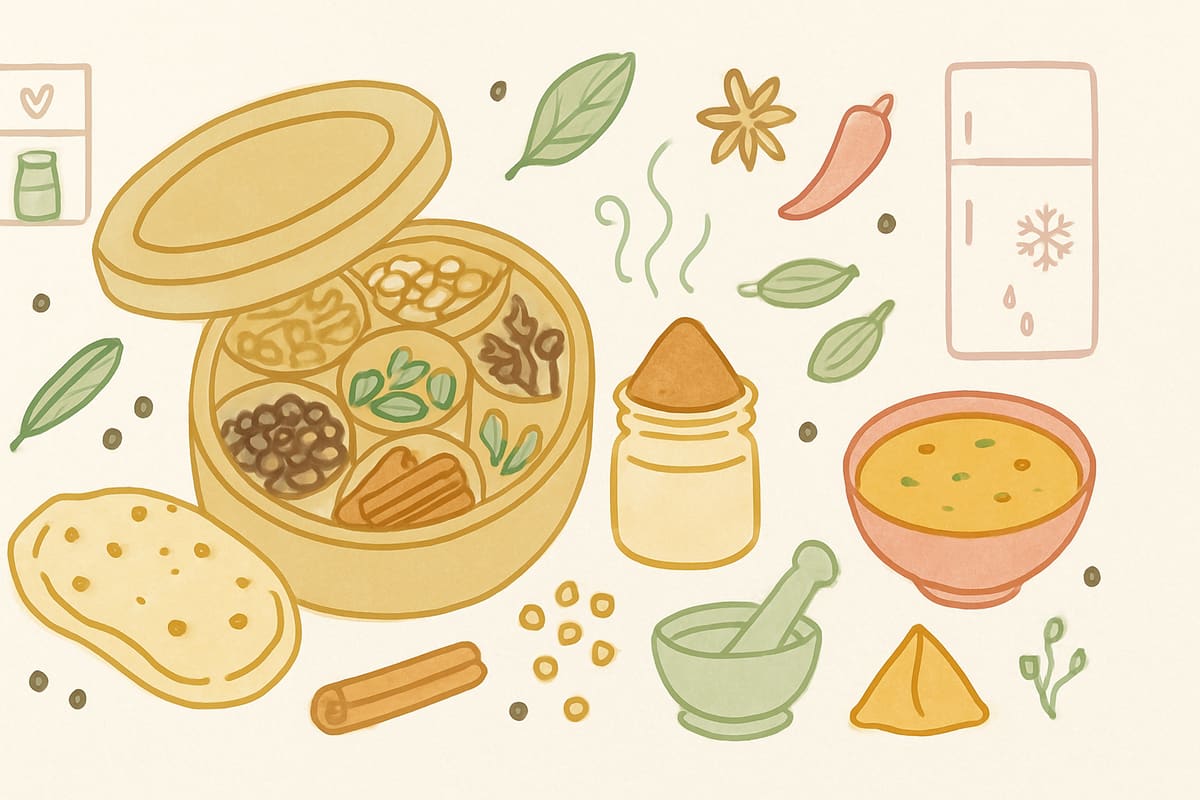
Real talk. For most Indian homes, garam masala is happier in a cool, dark, dry cabinet. Not the fridge door next to last night’s ketchup. Spices are shelf-stable; moisture is the real villain. That’s straight from food safety folks, not WhatsApp University. ([fsis.usda.gov](https://www.fsis.usda.gov/food-safety/safe-food-handling-and-preparation/food-safety-basics/shelf-stable-food))
So…should you refrigerate garam masala?
Short answer: Usually no. Ground spices like garam masala don’t need refrigeration for safety. They just need less heat, less light, and zero moisture. The bigger risk in the fridge is condensation when cold jars hit warm, humid kitchen air. That moisture can make spices cake and, in bad cases, let mould thrive. ([fsis.usda.gov](https://www.fsis.usda.gov/food-safety/safe-food-handling-and-preparation/food-safety-basics/shelf-stable-food))
What actually kills the flavour in garam masala?
You know what’s funny? It’s not “expiry” dates. It’s exposure. Heat, light, oxygen, humidity. These strip volatile oils from spices and flatten the aroma. India’s own food safety guidance flags humidity as the big problem for spices. Keep them dry and well ventilated; avoid damp spaces. That’s the rule. ([fssai.gov.in](https://www.fssai.gov.in/upload/uploadfiles/files/Guidance_Document_Spices_23_10_2018.pdf))
How long does garam masala stay “good”?
Let me break this down:
Here’s the cheat sheet:
- Whole spices (cumin, coriander, peppercorns, cardamom): best quality 1–2 years at room temp if stored well.
- Ground spices and blends (garam masala, chili powder, turmeric): best quality ~6–12 months. After that, flavour fades faster. Safety isn’t the issue; potency is. ([food.unl.edu](https://food.unl.edu/safety/storage/))
When does the fridge or freezer make sense?
Let’s be honest. Monsoon in Mumbai is savage. If your kitchen turns into a steam room, cold storage can work—but only with discipline.
- If you buy a big batch for the whole saal, split it. Keep a small working jar in the cabinet. Store the rest airtight in the freezer or fridge. Open the cold pack only after it warms up fully to room temp while still sealed, so no condensation forms inside. That’s the trick. Some extension programs even say refrigeration/freezing can extend shelf life—if you manage moisture perfectly. ([pubs.nmsu.edu](https://pubs.nmsu.edu/_e/E118.pdf))
- Why such drama about condensation? Spices are hygroscopic; they suck moisture from the air. When you move a cold jar into warm, humid air, micro-droplets form. That kickstarts caking and can create little wet pockets where microbes feel at home. Food science 101, backed by lab studies on moisture sorption and caking. ([tis-gdv.de](https://www.tis-gdv.de/tis_e/ware/gewuerze/safran/safran-htm/))
Okay, give me desi kitchen hacks that actually work
Here’s the game plan I use and recommend to clients:
- Buy smaller. Freshly ground garam masala every 3–4 months > huge dabba you forget in the back. Shelf life for blends is shorter; treat them like fresh perfume for your cooking. ([food.unl.edu](https://food.unl.edu/safety/storage/))
- Double-container strategy. Keep a tiny jar in your masala dabba and the rest sealed in a dark cabinet. Don’t keep any spice above the stove, next to the dishwasher, or on the sunny window. Heat + steam = speed-run to bland. ([ndsu.edu](https://www.ndsu.edu/agriculture/extension/publications/food-safety-basics-reference-guide-foodservice-operators))
- Never shake over steam. Don’t sprinkle straight from the jar onto sizzling pav bhaji or bubbling dal makhani. Spoon out away from the pot. Close the lid fast. Moisture ruins texture and can invite mould. ([fssai.gov.in](https://www.fssai.gov.in/upload/uploadfiles/files/Guidance_Document_Spices_23_10_2018.pdf))
- Opaque, airtight containers. Amber glass or steel tins, tight lids, and a cool shelf. That’s it. If your kitchen gets sweaty, drop a food-grade silica gel sachet in your bulk tin. Works way better than tossing in raw rice. ([food.unl.edu](https://food.unl.edu/safety/storage/))
- Roast whole, grind small. For the best butter chicken or mutton biryani, toast whole spices lightly and grind what you’ll use in a month. Whole spices hold aroma longer than powders. ([food.unl.edu](https://food.unl.edu/safety/storage/))
Does flavour loss affect nutrition?
Tiny bit. Spices carry beneficial compounds—phenolics, essential oils. When aroma fades, some of those compounds have oxidized or evaporated too. Indian guidance talks more about safe storage and hygiene than exact nutrient loss numbers, but the principle stands: protect aroma and you protect quality. (nin.res.in)
Mumbai monsoon game plan (step-by-step)
Here’s how you outsmart June–September:
- Step 1: Buy a 200–250 g pack of your favourite garam masala. Immediately split into 4–5 airtight mini-jars or pouches.
- Step 2: Keep one jar in your daily rack. Park the backups deep in a dark, cool cabinet. If your kitchen is super humid, stash backups in the freezer. Remember: thaw sealed to room temp before opening. ([pubs.nmsu.edu](https://pubs.nmsu.edu/_e/E118.pdf))
- Step 3: Label each jar with the open date. If, after 3–4 months, the smell is sleepy, you can “bloom” the spice in hot oil or ghee for your naan curry night—but that only wakes it up a little. It won’t resurrect lost aroma compounds.
Quick table: Where should garam masala live?
Here’s the cheat sheet:
| Storage option | When to use | How to do it right | Watch-outs |
|---|---|---|---|
| Room-temp cabinet (ideal) | Daily cooking, normal humidity | Opaque/steel tins, airtight, away from heat/light | Don’t keep above stove or fridge. ([ndsu.edu](https://www.ndsu.edu/agriculture/extension/publications/food-safety-basics-reference-guide-foodservice-operators)) |
| Refrigerator (advanced) | Very humid kitchens, large batches | Portion into small, airtight packs; let them reach room temp sealed before opening | Condensation risk if you open cold jars. ([tis-gdv.de](https://www.tis-gdv.de/tis_e/ware/gewuerze/safran/safran-htm/)) |
| Freezer (long-term) | Bulk buying, infrequent use | Vacuum-seal or very tight packs; open only after they warm up sealed | Repeated freeze–thaw = moisture ingress. ([pubs.nmsu.edu](https://pubs.nmsu.edu/_e/E118.pdf)) |
What about other masalas and dishes?
Same logic for your sambar powder, chole masala, pav bhaji masala—store them like garam masala. When you’re cooking sambar with idli, or slathering masala dosa with podi, don’t hover spice jars over steam. For north-Indian nights, whether it’s kidney bean (rajma) curry with chapati/roti or smoky tandoori chicken, same storage rules apply.
Where Shellel helps
You know how we eyeball masalas and then wonder why dinner is suddenly “extra chatpata”? With Shellel, you just log your meal—“2 roti, dal makhani, salad”—and the AI handles calories and macros for Indian food. If your butter chicken turns into a weekly habit, Shellel nudges you to balance it with a lighter poha breakfast or a protein bump. And if you want pure protein ideas, check the high-protein Indian foods list. Oh, and if tech is your jam, here’s why an AI nutritionist app saves your time.
- Protein picks: https://shellel.com/blog/high-protein-indian-foods
- Gut-friendly eating: https://shellel.com/blog/indian-foods-for-gut-health
- Why AI for diet works: https://shellel.com/blog/best-ai-diet-nutritionist-app
Wrap up
If your masalas live near the stove, they’re ageing in fast-forward. Shift them to a cool, dark cabinet, use small jars, and stop showering them with steam. Fridge/freezer only if you’re fighting monsoon humidity—and even then, portion smart and avoid condensation. Oh, and if you’re tired of guessing the macros in your pav bhaji or masala dosa, Shellel gets it. Type what you ate; we handle the math.
Sources worth your two minutes:
- Spices are shelf-stable; refrigeration not required for safety. ([fsis.usda.gov](https://www.fsis.usda.gov/food-safety/safe-food-handling-and-preparation/food-safety-basics/shelf-stable-food))
- Humidity invites mould; keep spices dry and well-ventilated (India FSSAI guidance). ([fssai.gov.in](https://www.fssai.gov.in/upload/uploadfiles/files/Guidance_Document_Spices_23_10_2018.pdf))
- Best-quality windows: whole 1–2 years; ground ~6–12 months (university extensions). ([food.unl.edu](https://food.unl.edu/safety/storage/))
- Why condensation is the enemy (spices are hygroscopic; moisture sorption and caking science). ([tis-gdv.de](https://www.tis-gdv.de/tis_e/ware/gewuerze/safran/safran-htm/))
- Cold storage can extend life if done right (portioning, sealed, warmed before opening). ([pubs.nmsu.edu](https://pubs.nmsu.edu/_e/E118.pdf))
— Not medical advice — talk to your doctor for anything specific to you. Nutrition data from ICMR-NIN tables.
Quick answers
Asked and answered
Do I need to refrigerate garam masala in Mumbai?
No. Not by default. Spices are shelf-stable and prefer a cool, dark, dry cabinet. Use the fridge/freezer only if humidity is crazy high—and manage condensation carefully. (fsis.usda.gov)
My garam masala clumps. Is it spoiled?
Clumping means moisture exposure. Spread a bit on a plate; if it still smells bright and complex, it’s usable. But fix your storage or it’ll go dull (and in worst cases, mould). (fssai.gov.in)
How do I test if my garam masala is still potent?
Rub a pinch between fingers and sniff. Weak aroma = time to replace. As a rule, blends taste best within 6–12 months if stored well. (food.unl.edu)
Can I keep a big batch in the freezer for a year?
You can, if you portion and seal it tight. Warm to room temp while sealed before opening to avoid condensation. Then use up each small pack within a month. (pubs.nmsu.edu)
Is there any health risk if spices get old?
Old spices mostly lose flavour. The risk comes from moisture—humid storage can encourage moulds. That’s why Indian guidelines stress dry, well-ventilated storage. (fssai.gov.in)