Most Indians don't eat enough protein. The average Indian diet gives you about 50g a day — but many adults aim for 60-90g a day, depending on their size and activity.
The good news? Indian food is full of high-protein options. You just need to know what to pick and how much to eat. No protein powders required.
How Much Protein Do You Actually Need?
A simple rule: 0.8 to 1g per kg of body weight for most adults. If you weigh 65 kg, aim for 52-65g daily. Trying to build muscle? Push it to 1.2-1.5g per kg.
Most people fall short not because Indian food lacks protein, but because meals are carb-heavy — rice, roti, and potato take center stage while dal and curd sit on the side.
The fix isn't a diet overhaul. It's knowing which foods pack the most protein and making sure they show up on your plate every meal.
Vegetarian High Protein Indian Foods
If you're vegetarian, protein is absolutely possible — you just need to be intentional about it.
Paneer — The Vegetarian Powerhouse
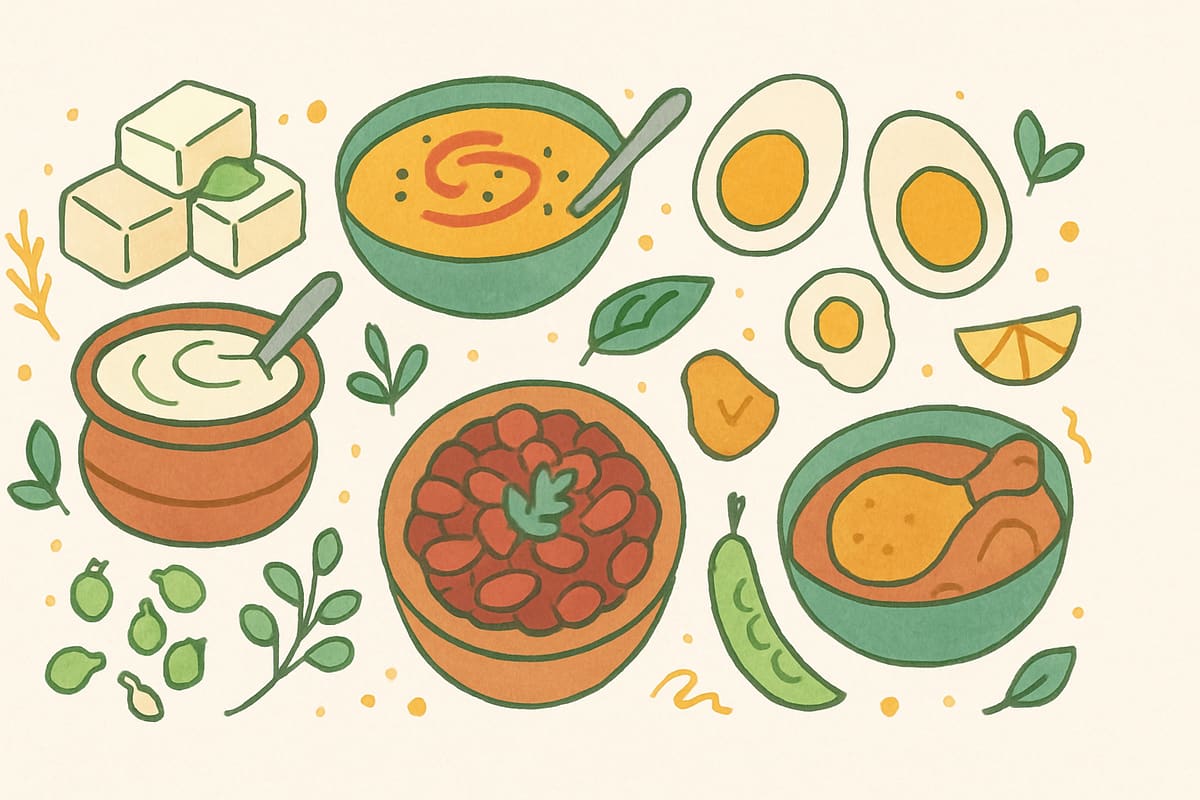
Paneer is the single best vegetarian protein source in Indian cooking. 100g of paneer gives you roughly 18g protein. A typical serving (75-100g) in paneer butter masala, palak paneer, or paneer tikka gets you 14-18g in one dish.
Best ways to eat it: tikka (grilled, less oil), bhurji (scrambled, quick breakfast), or in any sabji. Even raw paneer cubes as a snack work.
Dal and Lentils — Your Daily Protein Base
Dal is the backbone of Indian protein. One bowl (200g cooked) gives you:
| Dal Type | Protein per Bowl | Calories |
|---|---|---|
| Chana dal | 9g | 180 kcal |
| Moong dal | 8g | 130 kcal |
| Masoor dal | 7g | 120 kcal |
| Urad dal | 8g | 150 kcal |
| Toor dal | 7g | 140 kcal |
| Dal makhani | 7g | 148 kcal |
| Mixed dal | 8g | 140 kcal |
| Sambar | 6g | 120 kcal |
The trick with dal: One bowl alone isn't enough. But dal at lunch AND dinner gives you 14-18g — nearly a quarter of your daily target from one food.
Curd and Dairy
A cup of curd (200g) has about 11g protein. A glass of milk adds 8g. Raita with lunch is not just tasty — it's an easy protein bump.
Buttermilk (chaas) has less protein than curd but is a light, refreshing drink. If you're choosing between the two for protein, go with thick curd.
Legumes — Rajma, Chole, and Sprouts
These are your heavy hitters beyond dal:
- Rajma (kidney beans): 8g protein per bowl. Also loaded with fiber.
- Chole (chickpeas): 9g per bowl. One of the best protein-fiber combos in Indian food.
- Moong sprouts: 7g per cup. Light, easy to digest, perfect for breakfast or snack.
- Soybean chunks (meal maker): 25g protein per 50g dry. The highest protein vegetarian food — period.
The Vegetarian Protein Combo That Works
If you eat one bowl of dal + a serving of paneer + a cup of curd every day, that's roughly 36g protein from these three foods alone. Add roti (2-3g each), rice, and sabji, and you're easily hitting 50-60g without trying.
For 70g+, add sprouts at breakfast or soybean chunks to a sabji once or twice a week.
Eggetarian High Protein Indian Foods
Adding eggs to a vegetarian diet changes everything. Two eggs give you 12g protein for just 156 calories — one of the best protein-to-calorie ratios in any food.
Eggs — Simple and Versatile
| Preparation | Protein | Calories |
|---|---|---|
| Boiled egg (1 egg) | 6g | 78 kcal |
| Bhurji / scrambled (2 eggs) | 13g | 180 kcal |
| Plain omelette (2 eggs) | 12g | 170 kcal |
| Egg curry (2 eggs) | 14g | 220 kcal |
Best protein hack for eggetarians: Two boiled eggs at breakfast. Takes 10 minutes, gives you 12g protein before your day even starts. Pair with toast or paratha and you're at 15g by 9 AM.
Non-Vegetarian High Protein Indian Foods
Non-veg Indian food is protein-rich by nature. The challenge is that most preparations add a lot of oil and gravy, which bumps up calories.
Chicken
| Dish | Protein per Serving | Calories |
|---|---|---|
| Tandoori chicken | 25g | 200 kcal |
| Chicken curry | 22g | 250 kcal |
| Butter chicken | 16g | 206 kcal |
| Chicken kebab | 20g | 180 kcal |
| Chilli chicken | 18g | 230 kcal |
Best pick for protein: Tandoori and tikka — grilled, less oil, more protein per calorie. Butter chicken is delicious but the creamy gravy adds fat and calories without extra protein.
Fish
Fish is excellent for protein and usually lighter than chicken dishes. A serving of grilled or curry fish gives you 18-22g protein. Rohu, pomfret, and surmai are common and protein-rich.
How to Hit 75g Protein in a Day (Sample Plan)
Here's a realistic Indian meal plan that hits 75g protein without protein shakes or supplements:
Breakfast: 2 boiled eggs + 1 paratha + glass of milk → 12g + 3g + 8g = 23g protein
Lunch: 2 roti + dal + sabji + curd → 5g + 8g + 3g + 6g = 22g protein
Snack: Handful of peanuts + a banana → 7g + 1g = 8g protein
Dinner: Chicken curry + 1 roti + salad → 22g + 2g + 1g = 25g protein
Daily total: ~78g protein
For vegetarians, swap the eggs for paneer bhurji (14g) and the chicken for a paneer dish (18g). You'll still hit 65-70g.
Spread Your Protein Through the Day
Protein is made of amino acids, which your body uses to build and maintain tissue. Most people do better spreading it across the day than loading it all at dinner.
A simple habit: spread your protein across all three meals instead of loading it all at dinner.
Also, the source matters. Plant proteins (dal, chole, rajma) come with fiber that feeds your gut bacteria. Animal proteins don't. A mix of both — or plenty of plant protein with added curd — gives your gut the best of both worlds.
Common Mistakes That Keep Protein Low
Relying on roti and rice for fullness. Three rotis and a big serving of rice fills you up but gives you maybe 8g protein total. The dal and sabji are where the protein lives.
Skipping breakfast protein. Chai and biscuits has zero protein. Even adding a glass of milk or two boiled eggs changes your whole day.
Thinking paneer is unhealthy. Paneer has fat, yes. But 100g also has 18g protein. The fat keeps you full. Don't avoid it — just watch the portion.
Not eating enough dal. One small katori of dal gives you 4-5g. A proper bowl gives you 7-9g. The difference matters over a day.
Track What You Eat — It Changes Everything
Most people underestimate how much (or how little) protein they're eating. Tracking for even a week reveals patterns you'd never notice otherwise.
Shellel tracks protein, calories, and fiber for Indian food automatically — just tell it what you ate in plain language and it breaks down the macros. It also gives you a personalized protein target based on your weight, goals, and activity level.
Quick answers
Asked and answered
Which Indian food has the highest protein?
Soybean chunks (soya) have the highest protein at about 25g per 50g dry. Among common everyday foods, paneer (18g/100g) and chicken (25g/100g) are the best options.
Can vegetarians get enough protein from Indian food?
Yes. A combination of dal (7-9g per bowl), paneer (18g/100g), curd (11g/cup), and legumes like rajma and chole can easily give you 60-70g protein per day without any supplements.
How much dal should I eat per day for protein?
Two bowls of dal (one at lunch, one at dinner) gives you about 14-18g protein. That's roughly 20-25% of most people's daily target. Combine with other protein sources for a complete intake.
Is paneer better than chicken for protein?
Chicken has more protein per 100g (25g vs 18g) and less fat. But paneer is excellent for vegetarians and keeps you fuller due to its fat content. Both are great — pick based on your diet preference.
What's the cheapest high protein Indian food?
Eggs, dal, and milk. Two eggs cost about 15 rupees and give 12g protein. A bowl of dal costs even less. These are the most affordable protein sources in any Indian kitchen. --- Nutrition data sourced from ICMR-NIN Indian Food Composition Tables and the Shellel Food Database.