Nimbu Paani 101: Namak vs Khatta Meetha vs Meetha — Which one should YOU drink?
Here’s the thing. In Mumbai heat, your brain starts negotiating with the sun by 11 AM. That’s when the humble nimbu paani saves the day. But there isn’t just one type. There’s namak (salted), khatta meetha (sweet-sour with a pinch of salt), and meetha (sweet lemonade). Which variant is best for you… and when?
Let’s break it down like a proper desi hydration guide. With real numbers. With benefits you’ll actually feel.
What exactly is “nimbu paani” and how do these three variants differ?
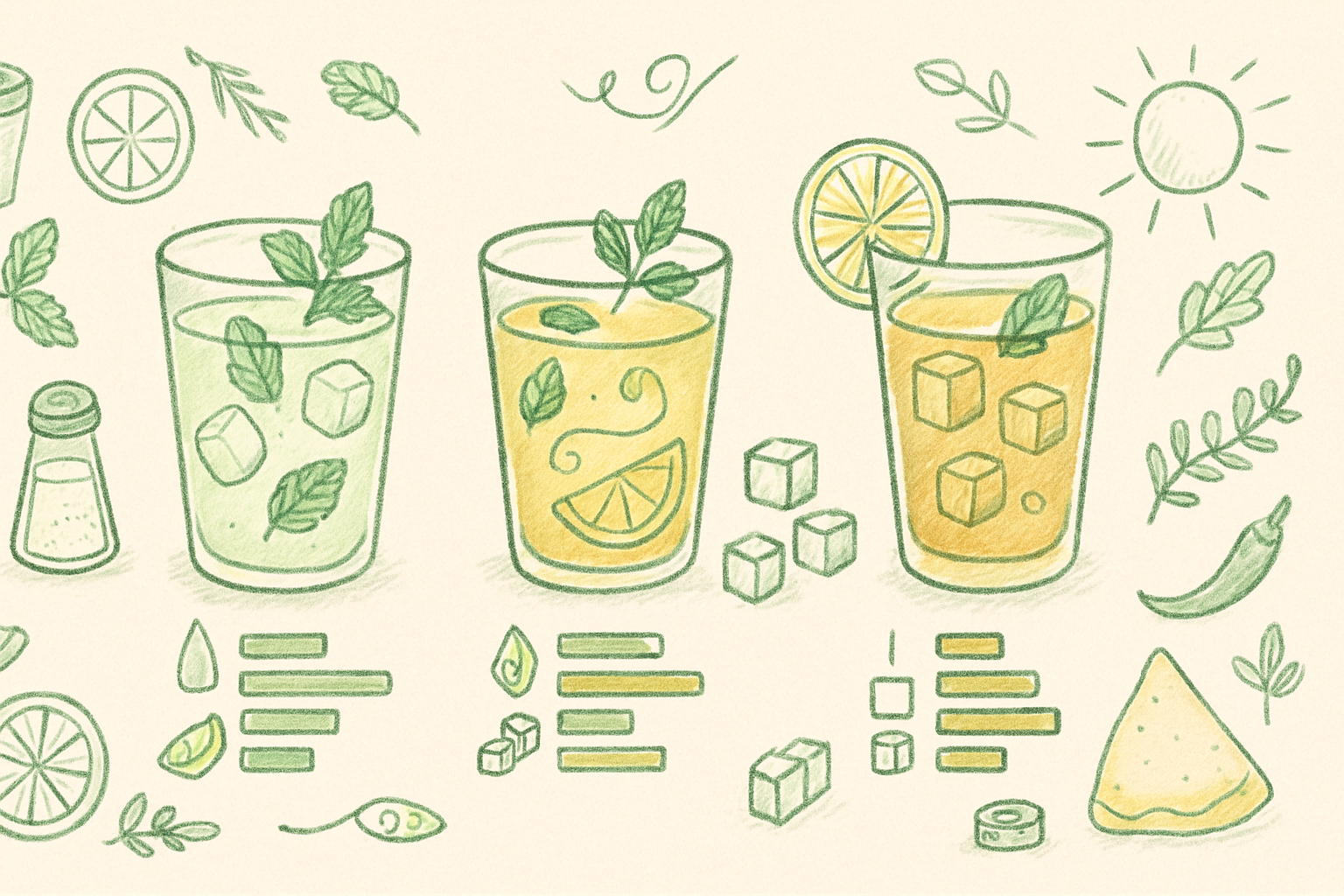
- Namak: water + lemon juice + salt. No sugar. Think “electrolyte-first.”
- Khatta Meetha: water + lemon juice + a little sugar + a little salt. The street classic. Balanced.
- Meetha: water + lemon juice + sugar. No salt. Purely sweet, like café-style lemonade.
By the way, if you want the base recipe, here’s the classic lemonade. And if you love masala vibes, close cousin jal-jeera is also a win.
Which nimbu paani is best for scorching Indian summer? Real talk. When you’re drenched in sweat (rickshaw to local to office marathon), your body loses water AND electrolytes. India’s official heat-wave guidance literally says—sip homemade drinks like lemon water, buttermilk, lassi, ORS. That’s not just dadi’s gyaan; it’s policy-level advice. (nidm.gov.in)
So:
- If you’re salty-sweaty after a commute or a turf game: namak or khatta meetha.
- If you’re just chilling at your desk with AC on: meetha is fine in moderation… but watch the sugar.
What does salt + sugar actually do inside your body? Here’s the nerdy-but-useful bit. Your gut has a transporter (SGLT1) that pulls sodium and glucose together—dragging water along for the ride. That’s why WHO’s ORS has both sodium and glucose. Your khatta meetha nimbu paani copies the same logic (lighter version), so you hydrate faster than with plain water. For severe dehydration though, use proper WHO-ORS, not DIY. (iris.who.int)
How many calories are in each variant? And what about vitamin C and sodium? Let me set a standard glass so we’re all talking the same language:
- Serving: 250 ml glass
- Lemon juice: 2 tbsp (~30 g)
- “Pinch” of salt: ~1/8 tsp (~0.75 g)
- 1 tsp sugar = ~4.2 g sugar (~16–17 kcal)
Cheat sheet (per 250 ml glass)
Namak (salted)
What’s inside: water + 2 tbsp lemon juice + 1/8 tsp salt
Calories: ~8 kcal
Carbs: ~2 g
Sodium: ~290 mg (because 1 tsp salt ≈ 2300 mg sodium; so 1/8 tsp ≈ 290 mg)
Vitamin C: ~12 mg
Why drink it: When you’re drenched in sweat and feel a little crampy or light-headed. Fast salt top-up, minimal sugar.
Notes: If you have high BP, go easy on the salt.
Khatta Meetha (sweet-sour with a pinch of salt)
What’s inside: water + 2 tbsp lemon juice + 1 tsp sugar + 1/8 tsp salt
Calories: ~24 kcal
Carbs: ~6 g
Sodium: ~290 mg
Vitamin C: ~12 mg
Why drink it: Best all-rounder for Indian summers—tiny sugar to aid absorption, enough salt to replace sweat.
Meetha (sweet lemonade)
What’s inside: water + 2 tbsp lemon juice + 2 tsp sugar
Calories: ~40–45 kcal
Carbs: ~10 g
Sodium: negligible
Vitamin C: ~12 mg
Why drink it: You want something refreshing and light, not super sweaty, just need a pick-me-up.
Where did those numbers come from?
- Vitamin C: 1 cup (244 g) raw lemon juice has ~94 mg vitamin C. Two tablespoons (~30 g) give ~11–12 mg. NIH/USDA data backs this. (ods.od.nih.gov)
- Salt → sodium math: Roughly 2300 mg sodium per teaspoon of table salt. So 1/8 tsp ≈ 290 mg. FDA explains this equivalence straight. (fda.gov)
- Sugar teaspoons: USDA’s Food Patterns Equivalents Database defines 1 tsp “added sugars” ≈ 4.2 g. That’s ~16–17 kcal. (ars.usda.gov)
Which variant gives what benefit?
Namak (salted)
- Hydration with a purpose. Replaces sodium you lose in sweat. That means fewer cramps and less “thakaan” after you reach the office drenched. Great for low BP moments or post-work sweat fests.
- Low calorie. Good if you’re controlling weight or fasting but still need electrolytes.
- Caveat: Hypertension? Kidney issues? Don’t go heavy on salt. When in doubt, half a pinch. And for severe dehydration, use WHO-ORS, not just salted lemonade. (iris.who.int)
Khatta Meetha (salt + a touch of sugar)
- Best of both. The little sugar helps pull sodium—and water—across your gut faster. Exactly why this tastes so satisfying after a sweaty run to catch your train. It’s the closest home-style cousin to ORS without going clinical. (iris.who.int)
- Still light on calories. Under 25 kcal per glass with 1 tsp sugar.
- Pro tip: a tiny pinch of black salt + roasted jeera makes it easier on a sensitive stomach (hello, office canteen experiments).
Meetha (sweet)
- Mood drink. Vitamin C + a little quick energy. Perfect for those “need something refreshing but I’m not soaked in sweat” days.
- But if you’re craving 3–4 glasses at a wedding buffet… that sugar stacks up. Maybe alternate with cumin-infused water (jeera pani) or plain water.
Does nimbu paani actually give you vitamin C… or is that just marketing? It’s legit. Two tablespoons of lemon juice give ~11–12 mg vitamin C—a tidy 15–20% of your day’s need, depending on your diet. Just don’t leave it sitting out for hours—vitamin C is sensitive. NIH/USDA data confirms the vitamin C numbers for lemon juice. (ods.od.nih.gov)
Can it help with kidney stones? You know what’s funny? Some urologists actually suggest citrate-rich drinks because citrate can help reduce calcium oxalate stone risk. Studies using lemon-based beverages have shown improvements in urine chemistry markers. Not a magic cure, but a helpful habit alongside medical advice. If you’re a stone-former, talk to your doctor about citrate strategies. (pubmed.ncbi.nlm.nih.gov)
Is khatta meetha a “homemade ORS”? Sort of, but not fully. WHO-ORS is a precise formula (sodium ~75 mmol/L, glucose ~75 mmol/L) designed for diarrhea-related dehydration. Your khatta meetha glass is lighter and tastier—but not medical-grade. For heat stress, NDMA says homemade lemon water is fine; for actual dehydration or illness, use WHO-ORS. (iris.who.int)
How to make each variant like a pro (Mumbai edition)
Namak (post-sweat saviour)
- 250 ml cold water
- 2 tbsp lemon juice
- 1/8 tsp salt (pinch). If you’re a heavy sweater, 1/4 tsp—but only if BP is normal.
- Optional: pinch black salt, pinch roasted jeera, 1–2 mint leaves
Khatta Meetha (balanced)
- 250 ml water
- 2 tbsp lemon juice
- 1 tsp sugar
- 1/8 tsp salt
- Optional: kala namak + jeera for that street-cart vibe
Meetha (sweet)
- 250 ml water
- 2 tbsp lemon juice
- 2 tsp sugar
- Optional: a tiny pinch of salt if you did sweat a bit—makes the flavour pop
Want variations? Try lemon-and-ginger squash at home (dilute well), tangy summer aam panna, or swap to lassi (salted) or meethi lassi when you want something creamy. For a festive switch, chilled thandai is also a mood.
Is street nimbu paani safe? Most thelas do a great job, but watch the ice and water quality. If your stomach is sensitive, ask for no ice and carry your own bottle. Or make a big jug at home and pour into your sipper. If you love that masala kick, DIY with a clean spice jar of roasted jeera + kala namak.
How much is too much sugar? Let’s be honest. Two meetha glasses back-to-back during a cricket match? That’s ~80–90 kcal from sugar alone. Perfectly fine sometimes. But if weight or blood sugar is a goal, switch one glass to namak or khatta meetha with just 1 tsp sugar. We wrote a full deep-dive on smart hydration for peak Indian summer—give it a scroll later. (nidm.gov.in)
- Also see: Why timing your fluids matters: Should you drink water during meals?
- Summer hacks you’ll actually use: Stay cool in Indian summer
- Counting exact homemade calories? This helps: How to count calories in homemade desi food
- Tired of Excel sheets? Here’s a smarter way: Best calorie counter app for desi food
Which variant for specific goals?
Weight loss: namak or khatta meetha (1 tsp sugar). Low calorie, still satisfying. Pair with a bowl of cucumber raita if you want something salty without overdoing chips.
After a run/turf/cricket nets: khatta meetha. It replaces salt, gives a gentle glucose nudge, and hydrates quicker than plain water. If you’re drenched, have two smaller glasses 10–15 minutes apart.
Office AC + light thirst: meetha is okay, but sip slow. Or go zero-sugar namak if you already had enough carbs at lunch.
High BP: prefer meetha or very-light-salt khatta meetha. Keep salt small, and talk to your doc if you’re unsure.
Diabetes/PCOS: namak or khatta meetha with 1/2 to 1 tsp sugar max. Or use a no-calorie sweetener you tolerate. Sugar may be “small,” but it adds up across tea, chai, desserts. If you want to keep it trad, just do namak—honestly tastes great with kala namak + jeera.
Stomach feels off: khatta meetha with roasted jeera + a tiny pinch of black salt often sits well. Skip street ice.
Is lemon really the hero, not just the sugar/salt? Yes. Lemon brings Vitamin C and natural citrate. The vitamin C math is solid (NIH/USDA). The citrate angle has clinical interest for kidney stone risk, with studies using lemon-based drinks improving urine chemistry in stone-prone patients. Not a cure, but a legit plus. (ods.od.nih.gov)
Real talk: tiny tweaks that make your glass smarter today
- Use measured pinches. If BP is fine and you sweat buckets, 1/8 tsp salt per glass is a practical target. That’s roughly 290 mg sodium—useful, but not OTT. (fda.gov)
- Keep sugar at 1 tsp for daily use; bump to 2 tsp only when you truly need a quick energy perk.
- Fresh-squeeze for better vitamin C. Don’t let it sit out forever. (ods.od.nih.gov)
- Add-ons that slap: roasted jeera, kala namak, mint. Or go full masala and try a homemade mini jal-jeera.
- If you’re severely dehydrated (heat exhaustion, vomiting/diarrhea), reach for WHO-ORS first. Khatta meetha is a comfort drink, not a medical treatment. (iris.who.int)
Frequently Asked Questions
Does black salt (kala namak) make it healthier?
Taste-wise, 100%. Health-wise, sodium is sodium—so it still counts. Use a pinch. If BP is high, keep it minimal.
Can I use jaggery instead of sugar?
Sure. Calories are similar. Jaggery has tiny minerals, but for hydration you mainly need water + sodium (and a touch of glucose). Don’t expect jaggery to replace salt.
Is sparkling nimbu paani okay?
Absolutely. Same rules: go namak or khatta meetha based on sweat. The fizz just makes it fun.
What about sweeteners?
If blood sugar is a goal, a no-calorie sweetener you tolerate is fine. Start low; adjust to taste. The salt + lemon combo already delivers flavour.
Can kids drink these?
Yes, in small glasses. If a child is actually dehydrated from illness, use WHO-ORS per pediatric advice. Your lemonade is for regular thirst, not treatment. (iris.who.int)
Wrap up If you remember just one thing: match your nimbu paani to your day. Sweat a lot? Namak or khatta meetha. Light thirst? Meetha. And if you’re tired of guessing the calories in your mid-day lemonade or your after-work jal-jeera — Shellel gets it. Type “1 glass khatta meetha nimbu paani” and chill. We handle the math while you sip.
Oh, and if you’re tired of guessing calories in mom’s rajma chawal — Shellel gets it. Just type what you ate and we handle the math: https://shellel.com
Not medical advice — talk to your doctor for anything specific to you. Nutrition data from ICMR-NIN tables and USDA/NIH; hydration guidance aligns with NDMA and WHO. (nin.res.in)
Author: Ashutosh Swaraj